
We live in the loudest era in human history. Whether you are navigating a bustling subway terminal, trying to write code in an open-concept office while coworkers debate sports three desks away, or trapped in row 24 on a cross-country flight next to twin turbofan engines, constant noise takes a measurable psychological toll. It spikes cortisol levels, shatters deep focus, drains cognitive energy, and leaves you feeling exhausted before the workday even reaches noon.
A great pair of noise-canceling headphones is not merely a luxury audio gadget; it is a personal quiet room you can carry inside your backpack. The moment you slip the earcups over your ears and activate the cancellation switch, the chaotic world outside fades into gentle velvet. The heavy rumble of jet engines disappears, the roar of passing traffic softens into background mist, and the room falls silent enough to hear the delicate guitar fretwork of your favorite album or slip into hours of uninterrupted creative flow.
However, choosing the right pair can feel like a minefield of conflicting marketing jargon. Some manufacturers promise revolutionary cancellation but saddle you with an unbearable headband clamp that gives you a headache after forty-five minutes. Others sound fantastic in a quiet showroom but fail completely against the screeching metal rails of a commuter train. Still others deliver excellent sound but suffer from touch controls that malfunction the moment you walk through autumn drizzle or wear winter gloves.
To help you make an informed decision and discover the model that best matches your lifestyle, this guide evaluates the best over-ear noise-canceling headphones of 2026. We examine published acoustic specifications, physical clamp ergonomics, driver materials, wireless codec bandwidths, and battery endurance across travel, office, and home listening environments.
The Physics and Engineering of Active Noise Cancellation
To understand why some headphones isolate you from the outside world far better than others, it helps to understand the physics of acoustic cancellation. Sound travels through air as pressure waves composed of alternating compressions (high air pressure) and rarefactions (low air pressure).
Active noise cancellation relies on a fundamental principle of wave mechanics known as destructive interference. When an external sound wave strikes your headphone ear cup, an ultra-sensitive micro-electro-mechanical system (MEMS) microphone captures the incoming acoustic waveform. Within fractions of a millisecond, an onboard digital signal processor (DSP) calculates an exact inverted replica of that wave, matching its frequency and amplitude but shifting its phase by 180 degrees.
When the headphone's speaker driver plays this inverted "anti-noise" signal simultaneously, the positive pressure peaks of the external noise collide with the negative pressure troughs of the anti-noise wave. The two waves cancel each other out, leaving your eardrum in calm silence.

Feedforward vs Feedback vs Hybrid Microphone Architecture
The effectiveness of an active noise cancellation system depends heavily on where its microphones are placed and how quickly its processor can compute anti-phase responses:
- Feedforward ANC: Microphones reside on the outer shell of the ear cup, listening to external environmental noise before it passes through the headphone body. This gives the processor a brief head start to synthesize an inverted wave. However, feedforward systems cannot verify what your ear actually hears inside the cup and are vulnerable to wind buffeting.
- Feedback ANC: Microphones sit inside the ear cup cavity, positioned directly in front of the speaker driver near your ear canal. These microphones listen to the exact blend of music and leaked ambient sound reaching your ear, allowing the processor to make precision real-time corrections. However, feedback systems process sound after it has already entered the cup, making them slower to react to sudden high-frequency noises.
- Hybrid Dual-Sensor ANC: The benchmark standard used by all top-tier models on our list. Hybrid architectures combine multiple external feedforward microphones with internal feedback microphones. By coordinating external acoustic predictive analysis with internal acoustic monitoring, hybrid systems attenuate both steady low-frequency rumbles and unpredictable ambient environmental noise.
The Vital Role of Passive Acoustic Isolation
Many buyers assume active electronics do all the work, but physics dictates clear boundaries. Active noise cancellation is extraordinarily effective at canceling continuous, predictable low-frequency sound waves below 1,000 Hz, such as the drone of an airplane cabin, train engine vibrations, air conditioners, and highway tire hum.
However, for unpredictable, high-frequency transients above 1,000 Hz, including clattering coffee shop ceramics, screaming toddlers, and sharp human conversation, electrical phase cancellation cannot react fast enough. In those frequency bands, your protection comes entirely from passive acoustic isolation: the density of the memory foam ear pads, the acoustic seal around your temples, and the mass of the ear cup shells. If a pair of headphones has loose clamping force or thin foam cushions that fail to seal around your jawline, even the most expensive digital processor will let high-frequency chatter leak straight into your ears.
The Best Noise-Canceling Headphones
Whether your priority is total airplane cabin silence, marathon battery endurance, plush all-day comfort, or audiophile soundstage fidelity, these top models represent the peak of wireless audio engineering in 2026:
1. Sony WH-1000XM5: Best Overall for Commuters and Daily Travel
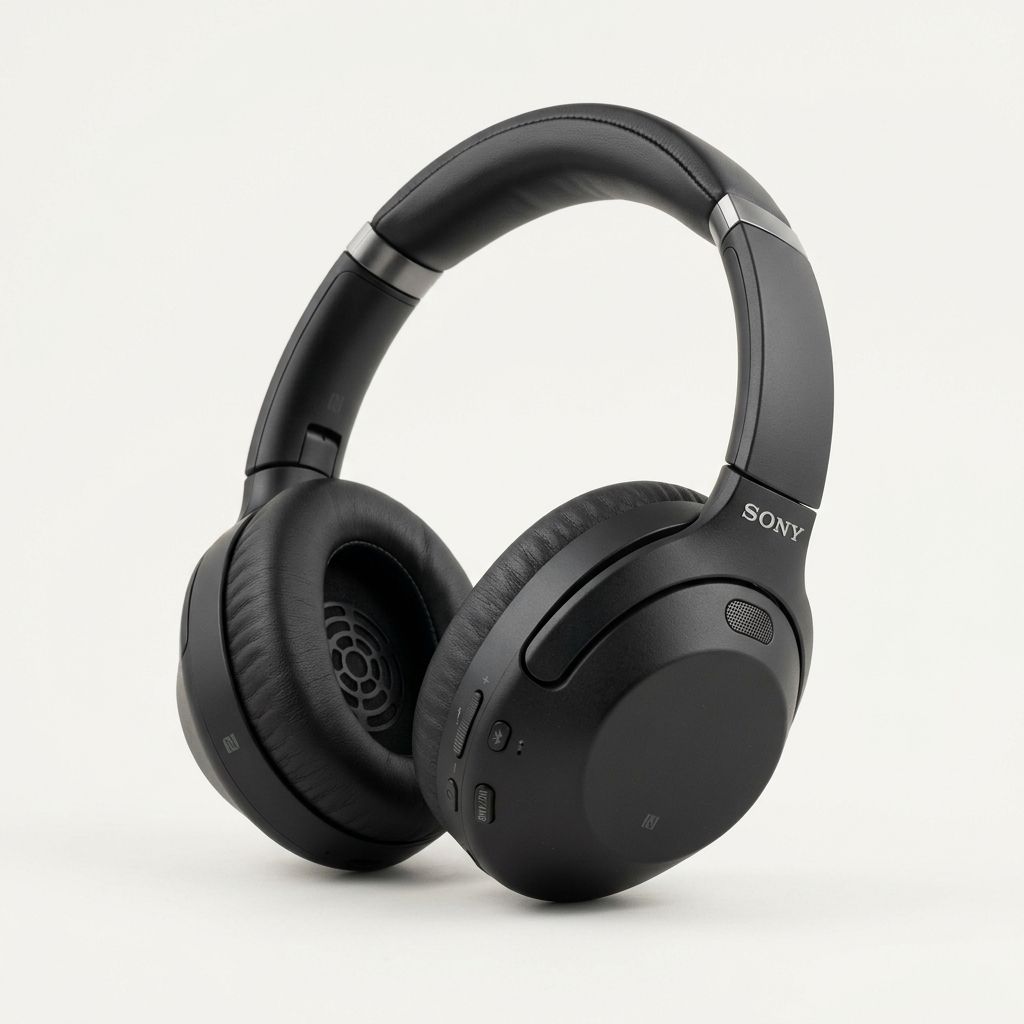
The Sony WH-1000XM5 earns our top overall recommendation because it delivers the most balanced, refined combination of aggressive noise cancellation, rich sound tuning, advanced software intelligence, and lightweight comfort available today. While its predecessors were renowned for bass-heavy warmth and folding travel frames, the XM5 reimagined the platform with a sleeker, noiseless chassis and an entirely upgraded acoustic engine.
At the core of the XM5's class-leading cancellation is a dual-processor architecture combining Sony's Integrated Processor V1 with their dedicated HD Noise Cancelling Processor QN1. These two chips govern an array of eight beamforming microphones (four on each ear cup). Unlike earlier headphones that required manual pressure calibration routines, the XM5's Auto NC Optimizer continuously monitors atmospheric barometric pressure and personal wearing factors, such as hair thickness and whether you are wearing glasses, dynamically adapting its cancellation curves on the fly. In subway cars and crowded train stations, it quiets high-mid screeching and nearby conversations with remarkable efficacy.
For acoustic reproduction, Sony moved away from older 40mm drivers to an engineered 30mm carbon-fiber composite dome driver with a high-rigidity edge and soft polyurethane surround. This stiffer, lighter diaphragm dramatically improves high-frequency clarity, eliminating the muddy, bloated mid-bass boom of earlier generations while retaining tight, tactile sub-bass impact. Supporting Sony's proprietary LDAC codec, the XM5 transmits up to 990 kbps of high-resolution 24-bit/96kHz audio over Bluetooth from compatible devices.
Everyday usability is where the XM5 shines brightest. Its Speak-to-Chat feature automatically pauses your audio and opens ambient sound the moment you start speaking to a flight attendant or barista, resuming playback several seconds after you stop. Multipoint Bluetooth connectivity lets you switch smoothly between your laptop during video calls and your smartphone for incoming calls without opening Bluetooth settings menus.
Key Specifications
- Driver Architecture: 30mm dynamic driver with carbon-fiber composite dome
- Noise Canceling System: Dual-chip processing (Integrated Processor V1 + HD QN1) with 8 microphones
- Weight: 250 grams (8.8 ounces)
- Battery Endurance: 30 hours (ANC On) / 40 hours (ANC Off)
- Fast Charging: 3 minutes of charge delivers up to 3 hours of playback (USB-PD)
- Bluetooth Version and Codecs: Bluetooth 5.2; LDAC, AAC, SBC
- Microphone Array: 4 beamforming microphones with AI deep neural network noise reduction
What We Liked
- Dual-chip processing provides stellar attenuation across both low engine hums and higher-pitched office chatter.
- Carbon-fiber composite 30mm drivers deliver tight, punchy bass with exceptional vocal clarity.
- Exceptionally lightweight 250g build with soft-fit synthetic leather causes virtually zero crown pressure.
- Speak-to-Chat and wear-detection sensors automate pausing without touching the ear cups.
- Industry-leading microphone background noise suppression for clear outdoor voice calls.
Things to Consider
- Headband arms rotate flat to fit into the included case, but the hinges do not collapse or fold inward.
- Soft matte exterior finish can attract finger oils over weeks of daily use and requires periodic wiping.
- LDAC high-resolution streaming requires compatible Android devices and is not supported on iOS.
2. Bose QuietComfort Ultra: Best Active Noise Cancellation for Flights
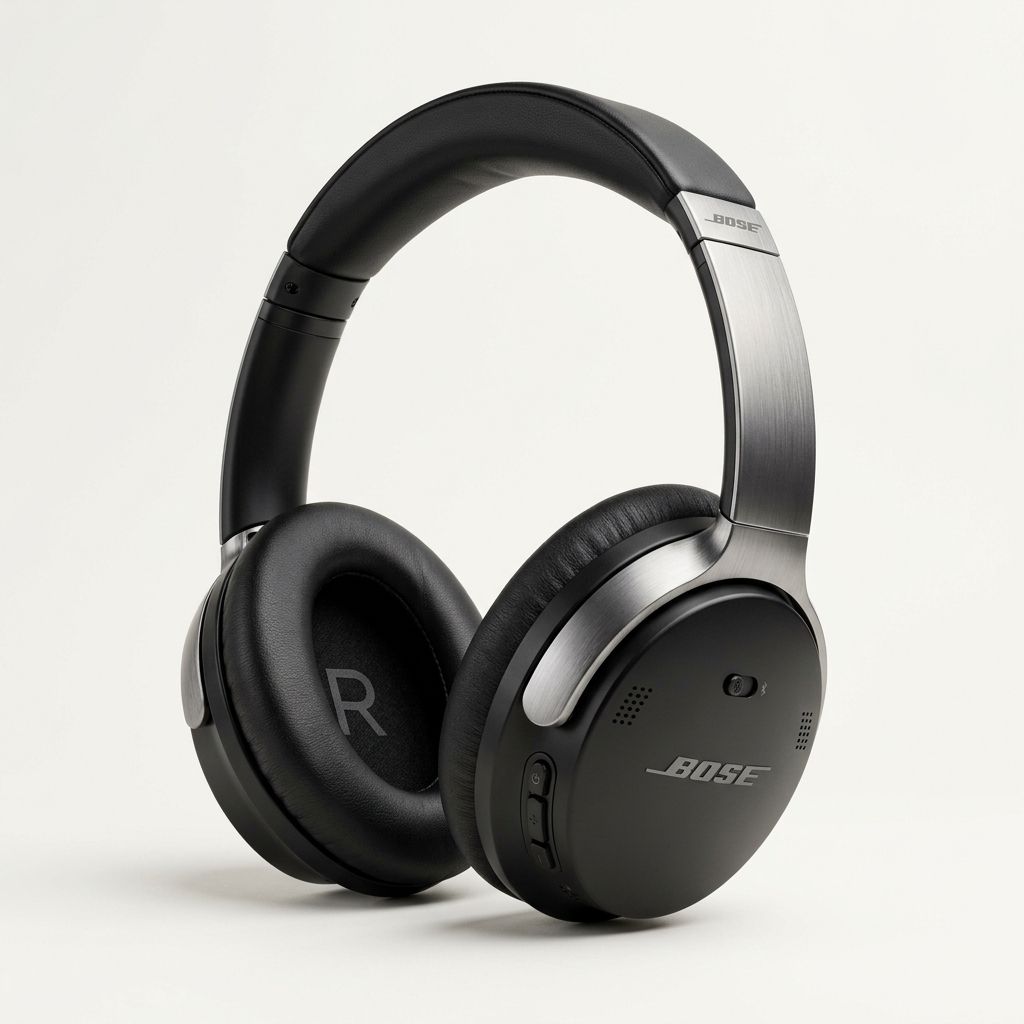
If your primary objective is absolute acoustic isolation, particularly when flying long international routes or riding commuter trains, the Bose QuietComfort Ultra stands at the pinnacle of active noise cancellation. Bose essentially invented consumer active noise cancellation for aviators four decades ago, and the QC Ultra represents the culmination of that acoustic lineage.
The standout engineering achievement on the QC Ultra is its CustomTune sound calibration technology. Every time you place the headphones on your head, they emit a brief proprietary chime. Microphones inside the ear cup capture the acoustic reflection of that chime as it bounces off your ear canal walls. In milliseconds, the internal DSP analyzes your unique ear anatomy and customizes both the audio equalization and the active cancellation algorithms specifically to your ears. This personalized calibration enables the QC Ultra to achieve unmatched attenuation in the difficult 200 Hz to 1,000 Hz band, making human voices, café chatter, and low engine hums virtually dissolve.
Bose also addressed the long-standing complaint regarding the bulky silhouette of the earlier Noise Cancelling Headphones 700. The QC Ultra returns to a premium folding hinge architecture with cast aluminum yokes, allowing the earcups to fold inward into a remarkably compact travel case that slides into any airplane seatback pocket. The clamping pressure is calibrated to an exceptionally gentle 3.2 Newtons, and the plush protein leather cushions create an airtight acoustic seal without causing the temporal pressure spikes that trouble glasses wearers.
The Ultra also introduces Bose Immersive Audio, an onboard spatial audio processing mode that pulls sound out of your head and anchors it in front of you, creating the sensation of listening to a pair of premium stereo bookshelf speakers in an acoustic room. It works across any audio source, whether you are streaming a podcast, watching an in-flight movie, or listening to standard stereo tracks.
Key Specifications
- Noise Canceling Architecture: CustomTune personalized ear canal acoustic calibration with multi-mic array
- Spatial Audio: Bose Immersive Audio (Still and Motion tracking modes)
- Weight: 253 grams (8.9 ounces)
- Battery Endurance: Up to 24 hours (standard ANC) / Up to 18 hours (with Immersive Audio)
- Fast Charging: 15 minutes of charge provides up to 2.5 hours of playback
- Bluetooth Codecs: Snapdragon Sound (aptX Adaptive), AAC, SBC
- Hinge Design: Full folding aluminum hinges with compact travel case
What We Liked
- The most powerful and thorough low-frequency and mid-frequency noise cancellation on the market.
- CustomTune personalized acoustic calibration ensures consistent silence regardless of ear shape.
- Superb folding design with aluminum yokes makes it the premier choice for frequent flyers.
- Class-leading comfort with feather-soft memory foam pads that accommodate eyeglasses easily.
- Smooth, intuitive physical capacitive volume slider on the right ear cup.
Things to Consider
- Battery life tops out at 24 hours, which is shorter than Sony (30h) and Sennheiser (60h).
- Enabling Bose Immersive Audio spatial processing drops battery life to approximately 18 hours.
- High-end investment price tier reflecting flagship travel positioning.
3. Anker Soundcore Space One: Best Value Under $100
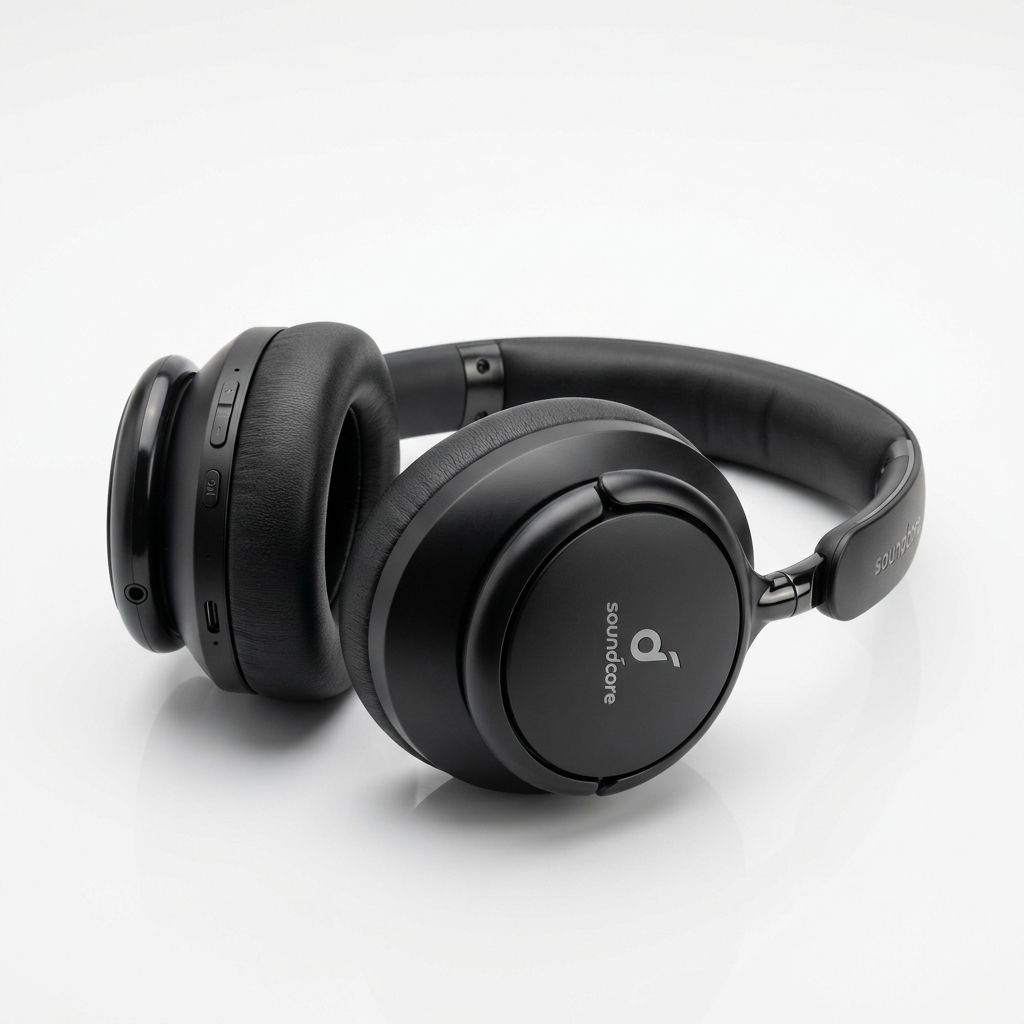
For students, remote workers, and budget-conscious commuters who cannot justify spending $350 to $400 on a pair of flagship headphones, the Anker Soundcore Space One is an astonishingly capable alternative. Anker has steadily disrupted the consumer audio space by packing flagship-tier hardware specifications into accessible price brackets, and the Space One is their most refined over-ear effort to date.
Rather than offering basic static cancellation, the Space One incorporates adaptive active noise cancellation. The headphones constantly detect varying levels of external noise and automatically adjust attenuation intensity across three distinct levels. Anker engineered the physical acoustic chamber with upgraded voice-reducing foam and customized acoustic soundproofing specifically targeted at speech frequencies, claiming up to two times greater vocal reduction than their prior Life Q30 series. While it cannot match the total cone of silence of the Bose QC Ultra, it easily silences office ventilation, air purifiers, and continuous street traffic.
Acoustically, the Space One uses customized 40mm dynamic drivers with PET diaphragms. It is certified for Hi-Res Audio Wireless and supports Sony's high-bitrate LDAC codec over Bluetooth, a rarity for headphones under $100. Through the companion Soundcore smartphone app, users have access to a full 8-band graphic equalizer along with HearID, an automated hearing sensitivity test that creates a tailored EQ profile compensating for individual hearing strengths and weaknesses.
Battery performance is another area where the Space One outperforms competitors twice its price. It delivers up to 40 hours of continuous playback with ANC enabled, expanding to a massive 55 hours in standard mode. A five-minute emergency USB-C fast charge yields four hours of listening time, ensuring you are never caught stranded on your morning commute with dead headphones.
Key Specifications
- Driver Size: 40mm customized dynamic drivers
- Noise Canceling Architecture: Adaptive ANC with voice-reduction acoustic structure
- Weight: 265 grams (9.3 ounces)
- Battery Life: 40 hours (ANC On) / 55 hours (ANC Off)
- Fast Charging: 5 minutes provides 4 hours of playback
- Bluetooth Codecs: LDAC, AAC, SBC with Bluetooth 5.3
- App Customization: Soundcore App with HearID personalized sound and 8-band EQ
What We Liked
- Exceptional value proposition delivering 80% of flagship performance at less than one-third the price.
- Support for high-resolution LDAC codec delivers impressive musical detail on compatible Android phones.
- Tremendous 40-hour battery life with ANC on means you only need to charge it twice a month.
- The Soundcore companion app provides best-in-class graphic EQ and customization presets.
- Soft 8-degree rotating ear cups pivot naturally to match varied jaw angles.
Things to Consider
- Plastic chassis construction feels lighter and less luxurious than aluminum or magnesium models.
- Default sound profile is bass-heavy out of the box and benefits greatly from quick app EQ adjustment.
- Microphone noise suppression in windy outdoor conditions is adequate but not exceptional.
4. Sennheiser Momentum 4 Wireless: Best Soundstage and 60-Hour Battery Life
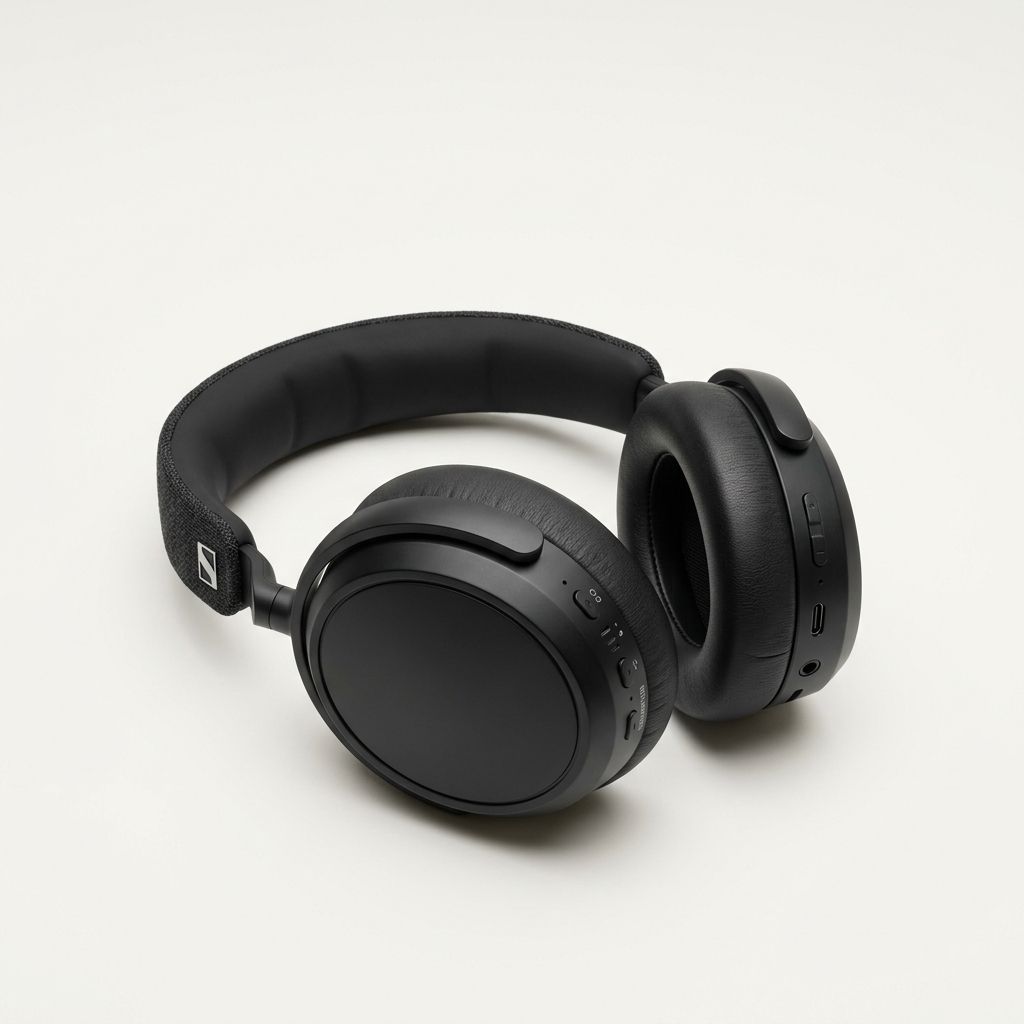
Most wireless noise-canceling headphones are engineered primarily as travel silence gadgets first and musical instruments second. The Sennheiser Momentum 4 reverses those priorities. Drawing upon Sennheiser's eighty-year heritage in high-end studio monitoring and audiophile headphones, the Momentum 4 is built for music lovers who refuse to compromise on soundstage breadth, instrument separation, and dynamic range for the sake of portable convenience.
The centerpiece of the Momentum 4 is its audiophile-inspired 42mm transducer system. Unlike smaller drivers that can compress or distort when asked to reproduce heavy bass lines while simultaneously rendering acoustic guitars, Sennheiser's large 42mm diaphragms move air with effortless authority. The acoustic presentation delivers deep, textured sub-bass extension that never bleeds into the midrange, paired with natural, open vocal reproduction and a spacious stereo image rarely found in closed-back wireless headphones.
Yet the Momentum 4's most staggering technical feat is its battery endurance. Sennheiser managed to extract a jaw-dropping 60 hours of continuous playback with active noise cancellation enabled from a single charge. In real-world terms, this means an everyday commuter who listens for three hours per day can travel for nearly three full weeks without ever plugging the headphones into a charger. It eliminates battery anxiety entirely, making it the supreme choice for off-grid travelers, digital nomads, and busy professionals who routinely forget charging cables.
Its Adaptive Noise Cancellation system continuously adjusts to environmental sound levels while avoiding the aggressive eardrum pressure common to older ANC sets. The headband is wrapped in a sophisticated woven textile fabric reminiscent of premium Scandinavian furniture, lending it an understated, elegant aesthetic that stands apart from generic plastic commuter headphones.
Key Specifications
- Acoustic Transducer: 42mm dynamic driver system with audiophile acoustic tuning
- Battery Endurance: 60 hours continuous playback (ANC On, Bluetooth On)
- Fast Charging: 10 minutes of charging yields up to 6 hours of playback
- Weight: 293 grams (10.3 ounces)
- Bluetooth Codecs: aptX Adaptive, aptX, AAC, SBC with Bluetooth 5.2
- Sensors: Smart Pause optical wear detection and automatic on/off power management
- Frequency Response: 6 Hz to 22,000 Hz
What We Liked
- Peerless 60-hour battery life with ANC on obliterates every direct competitor in this class.
- 42mm transducers offer expansive stereo imaging, pristine instrumental separation, and deep bass texture.
- Smart Pause optical wear sensor works flawlessly, pausing audio instantly when an ear cup is lifted.
- Support for Qualcomm aptX Adaptive delivers low-latency high-resolution audio on supported devices.
- Sophisticated woven fabric headband aesthetic feels distinct and refined in business and office settings.
Things to Consider
- Active noise cancellation, while very good, is a step behind the near-total silence of the Bose QC Ultra and Sony XM5.
- Touch gesture controls on the flat right ear cup can occasionally be triggered accidentally when adjusting the headband.
- Earcups lay flat but do not collapse into a compact ball, requiring a slightly wider travel case.
5. Apple AirPods Max (USB-C): Best for Apple Ecosystem and Spatial Audio
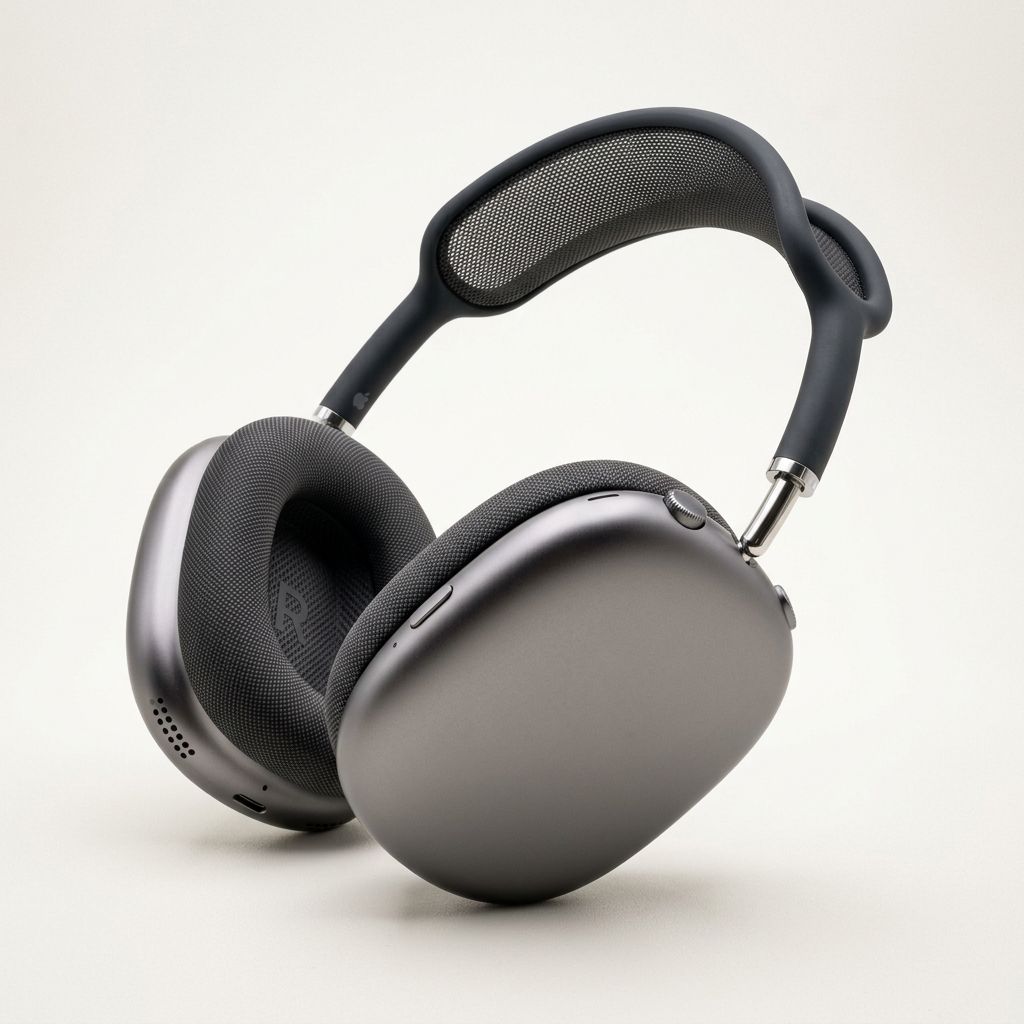
If you are fully invested in the Apple ecosystem, owning an iPhone, MacBook, and iPad, no other wireless headphones can match the seamless elegance, computational power, and premium materials of the Apple AirPods Max. Recently refreshed with universal USB-C charging, the AirPods Max remains a tour de force in industrial design and computational acoustics.
Where nearly all competing headphones rely on molded plastic shells to cut costs and weight, Apple constructed the AirPods Max using bead-blasted anodized aluminum ear cups joined by a stainless steel headband frame. To distribute its substantial 384.8-gram weight evenly across the crown of the head, Apple engineered a breathable knit-mesh canopy headband that eliminates localized pressure hot spots. The ear cushions are wrapped in an acoustically engineered mesh textile that breathes significantly better than synthetic leather, preventing the sweaty ear fatigue common to marathon video editing and production sessions.
Under the aluminum exterior, each ear cup houses an independent Apple H1 computational audio chip. Utilizing ten audio cores per chip that process nine billion operations per second, the H1 powers Adaptive EQ, which measures the sound signal delivered to your ears at 200 times per second and adjusts low and mid frequencies in real time to compensate for cushion fit and seal. Its active noise cancellation is remarkably potent, but its Transparency Mode is the undisputed benchmark of the consumer electronics industry: it sounds so completely natural, transparent, and spatial that you forget you are wearing headphones at all.
For movie enthusiasts, Apple's Personalized Spatial Audio with dynamic head tracking transforms film watching on an iPad, Mac, or Apple TV into a private cinematic theater, locking Dolby Atmos audio channels in physical space as you turn your head.
Key Specifications
- Acoustic Transducer: Apple-designed 40mm dynamic driver with dual neodymium ring motor
- Computational Audio: Dual Apple H1 chips (10 audio cores per chip) with Adaptive EQ
- Weight: 384.8 grams (13.6 ounces)
- Battery Endurance: Up to 20 hours of listening time (ANC On or Spatial Audio On)
- Charging Port: Universal USB-C port
- Control Architecture: Precision Digital Crown for volume and playback, plus dedicated Noise Control button
- Materials: Anodized aluminum cups, stainless steel telescoping arms, breathable knit mesh canopy
What We Liked
- Unmatched industrial build quality featuring cold-touch anodized aluminum and stainless steel.
- The most natural, transparent ambient listening mode ever engineered on a pair of over-ear headphones.
- Exceptional Personal Spatial Audio with dynamic head tracking for cinema-grade movie viewing.
- Flawless automatic device switching and audio sharing across macOS, iOS, and iPadOS devices.
- The Digital Crown wheel provides tactile, satisfying, and precise physical volume control.
Things to Consider
- Substantially heavier than plastic rivals (384.8g versus 250g for Sony and 253g for Bose).
- Smart Case remains flimsy and provides minimal protection for the exposed knit mesh canopy.
- Lacks advanced high-res Bluetooth codecs like LDAC or aptX Lossless when paired with Android or Windows.
6. Bose QuietComfort Headphones: Best Physical Button Controls and Classic Folding Design
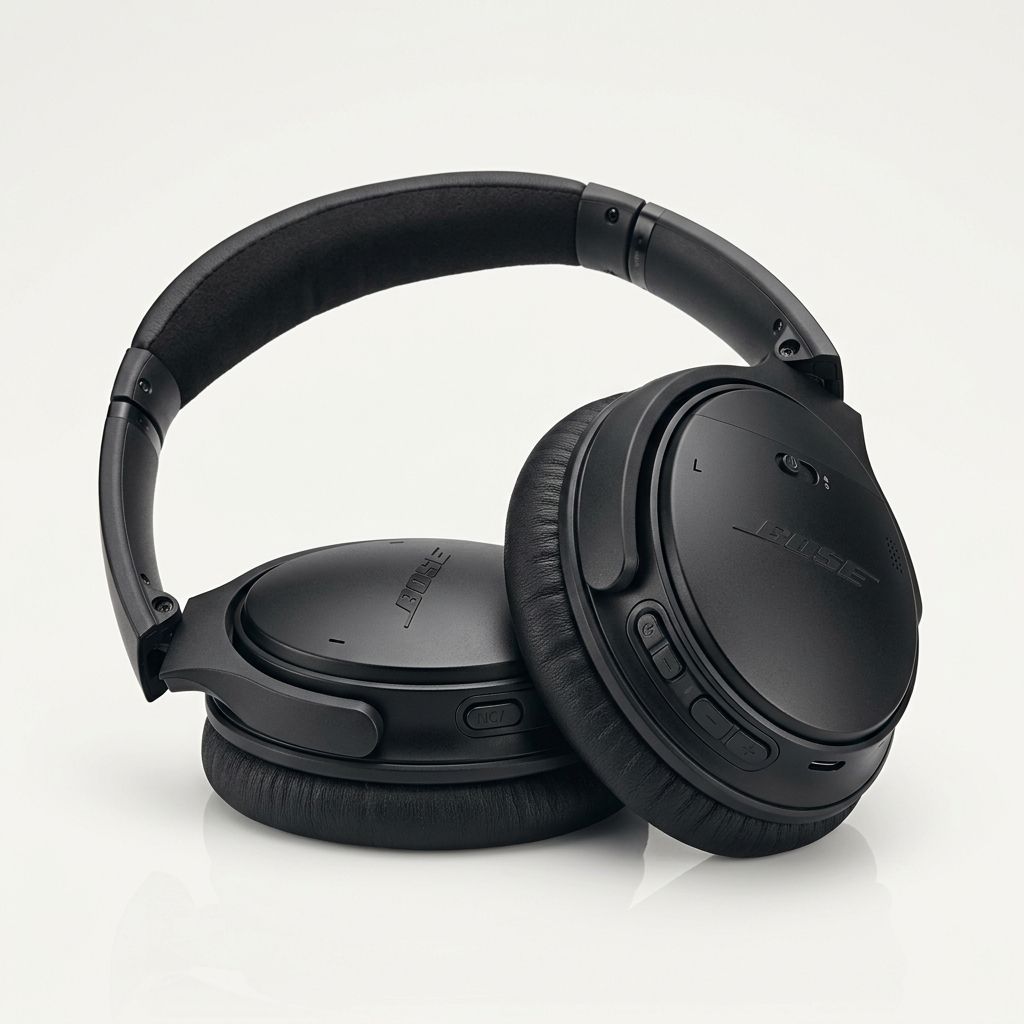
While the flagship QuietComfort Ultra pushes the boundary of spatial audio and capacitive touch strips, many seasoned travelers and desk workers yearn for the classic simplicity that made the Bose QuietComfort 35 and 45 legendary. The updated standard Bose QuietComfort Headphones (the direct successor to the QC45) deliver precisely that: foolproof physical click buttons, an ultra-compact inward-folding frame, and sublime lightweight comfort.
In an era where headphone manufacturers have universally adopted touch-sensitive swipe pads on ear cup exteriors, the standard QuietComfort remains a breath of fresh air. It features real tactile physical buttons for volume, track skipping, power toggling, and noise canceling modes. If you live in a cold climate and wear thick winter gloves, or if you regularly get caught walking in sudden rain, physical buttons never fail, never misfire, and provide instant mechanical feedback without requiring you to take off your gloves or fumble with sweaty touch panels.
Ergonomically, this model represents what many audio enthusiasts consider the most comfortable headphone chassis ever manufactured. Weighing just 240 grams with gentle clamping pressure and deep, spacious ear cup cavities that never pinch your ear cartilage, it feels practically weightless during eight-hour transatlantic flights. Furthermore, its dual-axis folding hinges allow the ear cups to fold inward and tuck flat into a compact hardshell case that is nearly 30 percent smaller than cases required by non-folding flagships.
Bose also added an adjustable Wind Block mode to this generation, solving a historical annoyance where strong outdoor gusts would buffet the external microphone ports and cause unpleasant whistling. Its sound profile is tuned for warm, effortless, fatigue-free listening, making it a dependable daily companion for work, study, and frequent travel.
Key Specifications
- Weight: 240 grams (8.5 ounces)
- Noise Canceling Modes: Quiet Mode, Aware Mode, Wind Block, and Custom Modes
- Control Interface: Tactile physical push-buttons (volume, pause/play, multi-function, action button)
- Battery Endurance: Up to 24 hours of continuous playback with ANC
- Fast Charging: 15 minutes of charging provides up to 2.5 hours of playback
- Hinge Architecture: Dual-axis inward folding design with ultra-compact travel case
- Included Accessories: 3.5mm to 2.5mm audio cable with in-line microphone, USB-C cable, hardshell case
What We Liked
- Physical tactile click buttons eliminate false triggers and work effortlessly with gloves in cold weather.
- Dual-axis inward folding design collapses into an exceptionally compact hardshell case.
- Featherlight 240g weight and gentle clamping force provide cloud-like all-day wearing comfort.
- Wind Block mode effectively suppresses microphone buffeting during blustery outdoor walks.
- Includes an analog audio cable with integrated microphone for wired gaming and aircraft compatibility.
Things to Consider
- Lacks the advanced CustomTune personalized ear acoustic calibration found on the QC Ultra.
- Does not support high-resolution codecs like aptX Adaptive or LDAC (limited to AAC and SBC).
- No built-in automatic wear-detection sensor to pause music when removing the headphones.
7. Sony WH-CH720N: Best Lightweight Budget Commuter (Only 192 Grams)
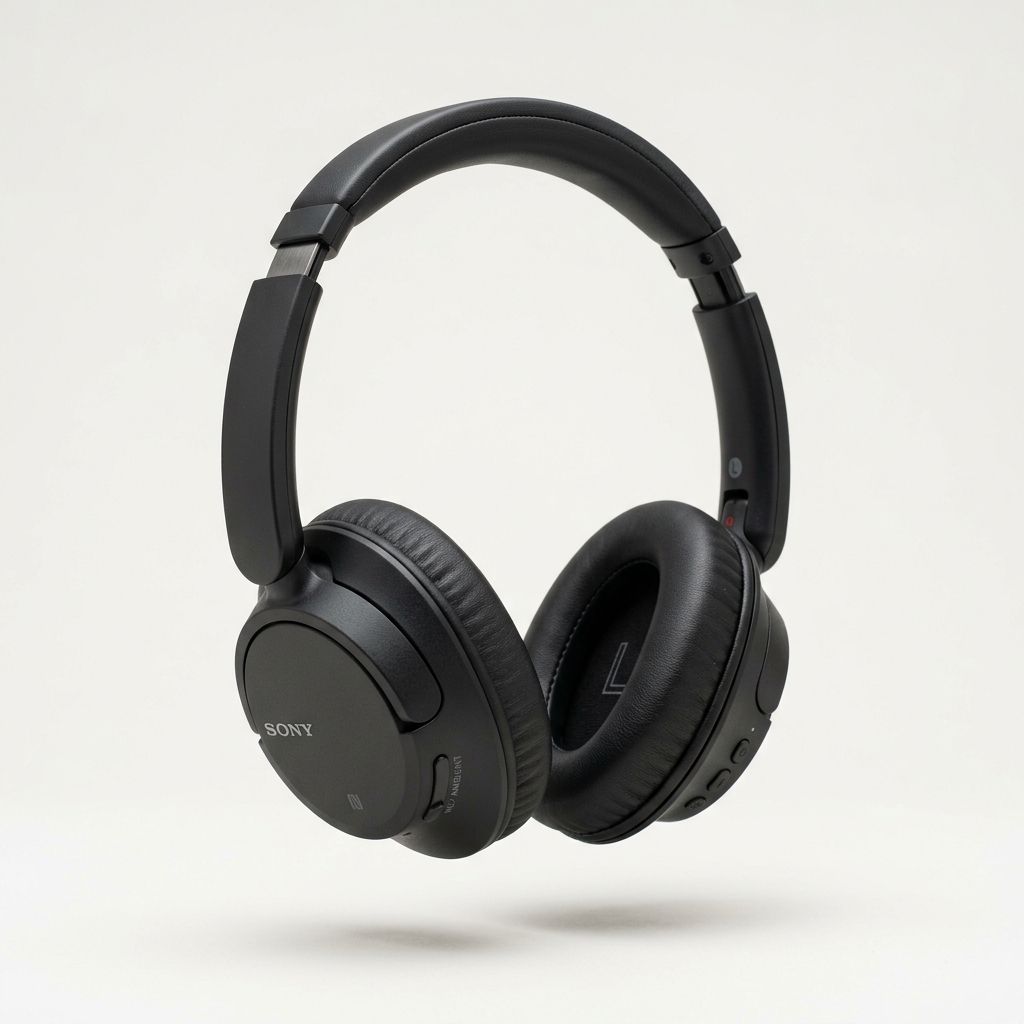
If you have ever felt neck fatigue or crown soreness after wearing a heavy pair of headphones for several hours, the Sony WH-CH720N was built specifically for you. Weighing an astonishingly light 192 grams (6.77 ounces), it is Sony's lightest overhead wireless noise-canceling headphone, coming in over 20 percent lighter than the flagship WH-1000XM5 and half the weight of the Apple AirPods Max.
What makes the WH-CH720N remarkable is that Sony did not gimp its acoustic processing brain to hit its aggressive budget price point. It incorporates the exact same Integrated Processor V1 found inside the $400 WH-1000XM5. This chip manages Sony's Dual Noise Sensor technology, pairing external and internal microphones on each cup to catch ambient sound and cancel it with rapid algorithmic agility. While it lacks the secondary QN1 chip and extra microphone array of the XM5, it punches far above its weight class in suppressing transit rumbles, desktop fan hums, and coffee house murmur.
Acoustically, the CH720N features Sony's Digital Sound Enhancement Engine (DSEE), which restores high-frequency harmonics lost during lossy digital file compression. Through the Sony Headphones Connect app, listeners can fine-tune a full 5-band graphic equalizer with Clear Bass adjustment, tailoring the sound from neutral vocal clarity to deep club rumble.
Battery life is robust, reaching up to 35 hours with active noise cancellation engaged, expanding to a massive 50 hours with ANC turned off. Multipoint Bluetooth pairing is included as standard, allowing seamless handoffs between your smartphone and office computer. For students walking across campus or remote workers sitting through back-to-back Zoom meetings, the CH720N delivers extraordinary comfort and capable silence without emptying your wallet.
Key Specifications
- Weight: 192 grams (6.77 ounces) - ultra-lightweight category leader
- Processing Architecture: Sony Integrated Processor V1 with Dual Noise Sensor technology
- Battery Endurance: 35 hours (ANC On) / 50 hours (ANC Off)
- Audio Enhancement: Sony DSEE (Digital Sound Enhancement Engine) with 5-band app EQ
- Fast Charging: 3 minutes of charge provides up to 1 hour of playback
- Bluetooth Codecs: AAC, SBC with Bluetooth 5.2 multipoint pairing
- Control System: Physical tactile buttons along the lower rim of the ear cups
What We Liked
- Unbelievably featherlight 192-gram construction causes zero neck strain or crown pressure points.
- Incorporates the flagship Integrated Processor V1 for fast, responsive cancellation performance.
- Impressive 35-hour battery life with ANC enabled provides days of uninterrupted use.
- Reliable physical tactile buttons and multipoint connectivity between two devices simultaneously.
- Access to the full Sony Headphones Connect app with customizable 5-band EQ and Clear Bass.
Things to Consider
- All-plastic construction and thinner headband padding reflect budget lightweight design choices.
- Does not support Sony LDAC high-resolution wireless codec (limited to standard AAC and SBC).
- Does not include a zippered travel case in the box (carrying pouch sold separately).
Side-by-Side Specification Matrix
To help you compare the core hardware differences across all seven recommendations at a glance, here is how the specifications align side-by-side:
| Model | Driver Size | Weight | Battery (ANC) | Key Codecs | Controls | Best Use Case |
|---|---|---|---|---|---|---|
| Sony WH-1000XM5 | 30mm Carbon Fiber | 250g | 30 Hours | LDAC, AAC, SBC | Touch + Buttons | Best Overall Daily Commuter |
| Bose QC Ultra | 35mm Dynamic | 253g | 24 Hours | aptX Adaptive, AAC | Touch + Buttons | Best Pure ANC for Flights |
| Soundcore Space One | 40mm PET | 265g | 40 Hours | LDAC, AAC, SBC | Physical Buttons | Best Value Under $100 |
| Sennheiser Momentum 4 | 42mm Transducer | 293g | 60 Hours | aptX Adaptive, AAC | Touch Sensor | Best Soundstage and Battery |
| Apple AirPods Max | 40mm Dual Neodymium | 384.8g | 20 Hours | AAC, SBC | Digital Crown | Best Apple Ecosystem Fit |
| Bose QuietComfort | 35mm Dynamic | 240g | 24 Hours | AAC, SBC | Physical Click Buttons | Best Tactile Controls & Folding |
| Sony WH-CH720N | 30mm Dynamic | 192g | 35 Hours | AAC, SBC | Physical Buttons | Best Ultra-Lightweight Budget |
Headphone Ergonomics, Clamp Force, and Eyeglasses
When browsing technical spec sheets, it is easy to focus exclusively on decibel attenuation ratings and frequency response curves. However, the best active noise cancellation in the world is useless if the headphones hurt to wear after forty-five minutes.
Headphone ergonomics are governed by three mechanical elements:
1. Clamping Force (Measured in Newtons)
Clamping force is the lateral pressure the headband exerts to press the ear cups against your skull. Headphone engineers face a delicate balancing act:
- Too loose (under 2.5 Newtons): The earcups will slide off your head when you tilt forward to tie your shoes or look at a laptop, and the acoustic seal will break whenever you turn your neck, instantly destroying low-frequency bass and noise cancellation.
- Too tight (over 5.0 Newtons): Within an hour, excessive clamping pressure compresses the superficial temporal nerves and blood vessels around your temples and jaw joints (TMJ), causing throbbing tension headaches and cartilage soreness.
- The Sweet Spot (3.0 to 4.0 Newtons): Models like the Bose QuietComfort Ultra (3.2N) and Sony WH-1000XM5 (3.6N) achieve the ideal balance, providing secure stability during brisk walking while feeling weightless across multi-hour work shifts.
2. The Eyeglasses Seal Penalty
If you wear prescription glasses or sunglasses, you face a unique acoustic hurdle. Rigid spectacle frames create a small channel where the ear cushion meets your temporal bone. Acoustic laboratory measurements published in audio engineering journals demonstrate that even a millimeter gap around an eyeglass temple can reduce low-frequency noise cancellation by 5 to 8 decibels and cause an audible drop in sub-bass response.
To combat this, look for headphones with slow-recovery memory foam wrapped in compliant synthetic leather (such as the Bose QuietComfort line). Slow-recovery foam gently deforms and wraps completely around the eyeglass frame, sealing the air gap and preserving total cancellation.
3. Cushion Heat Dissipation and Sweating
Synthetic protein leather (pleather) provides the tightest acoustic seal and the most effective passive noise isolation. However, because pleather is non-porous, it traps skin moisture and body heat inside the ear cup. In warm offices or during summer commutes, your ears will warm up after ninety minutes.
If you are prone to ear sweating, models with breathable textile mesh (like the Apple AirPods Max) allow air to circulate freely through the ear cups, keeping your ears significantly cooler, although at the cost of slightly lower high-frequency passive isolation.
Microphone Voice Quality in Open Offices and Remote Work
Since the rise of hybrid and remote work, headphones serve dual duty as communication hubs. There is nothing more frustrating on an important client video call or executive meeting than coworkers chattering in the background or wind gusts muting your voice.
Flagship headphones deploy sophisticated beamforming microphone arrays paired with AI-trained Deep Neural Networks (DNN):
- Sony WH-1000XM5: Uses four precision beamforming microphones calibrated with an AI noise reduction algorithm trained on over 500 million voice samples. It excels at isolating your voice and filtering out barking dogs, kitchen appliances, and typing clicks.
- Bose QuietComfort Ultra: Employs an advanced microphone array that dynamically tracks your vocal pattern while rejecting cross-talk from nearby speakers, making it a reliable performer in busy airport terminals.
- Apple AirPods Max: Integrates beamforming microphones with computational voice isolation built into iOS and macOS, offering pristine voice clarity during FaceTime, Slack, and Zoom calls.
Long-Term Maintenance and Battery Longevity
Investing in a premium pair of noise-canceling headphones should provide five or more years of dependable service. To ensure your investment endures, keep these practical ownership tips in mind:
- Replace Ear Cushions Every 18 to 24 Months: Ear pads are consumable items. Over time, skin oils, sweat, and UV exposure degrade the memory foam's elasticity and cause the synthetic leather to crack. Replacing worn pads with fresh authentic replacements immediately restores original bass response, acoustic seal, and noise cancellation performance.
- Practice Healthy Charging Habits: Avoid leaving your headphones plugged into high-wattage laptop chargers overnight. Charge them using standard 5V/2A USB ports and try to keep battery levels between 20 percent and 80 percent when possible to prevent premature lithium-ion cell degradation.
- Use Hard Shell Cases When Traveling: Tossing naked headphones into a backpack alongside heavy laptops, power bricks, and water bottles is the leading cause of broken headband sliders and bent aluminum yokes. Always collapse your headphones into their included protective travel cases before stowing them.
The Bottom Line: Which Pair Is Right for You?
Finding the ideal noise-canceling headphones comes down to identifying where you spend your days and what matters most to your ears:
- If you want the best overall all-around experience for daily commuting, working at your desk, and traveling with intelligent automation and lightweight comfort, choose the Sony WH-1000XM5.
- If your top priority is unrivaled active noise cancellation on airplanes and trains with an ultra-compact folding frame and cloud-like ear cushions, choose the Bose QuietComfort Ultra.
- If you want phenomenal value under $100 with adaptive cancellation, LDAC Hi-Res Audio, and 40-hour battery life, choose the Anker Soundcore Space One.
- If you are an audiophile and music lover who demands expansive soundstage and refuses to charge your headphones more than once a month, choose the Sennheiser Momentum 4 Wireless (60-hour battery).
- If you are deeply embedded in the Apple ecosystem and want the most luxurious materials, pristine Transparency Mode, and cinematic spatial audio, choose the Apple AirPods Max (USB-C).
- If you prefer foolproof physical click buttons and an inward-folding design that works flawlessly with winter gloves, choose the Bose QuietComfort Headphones.
- If you suffer from neck strain and want an ultra-featherlight 192-gram commuter headphone powered by flagship Sony processing, choose the Sony WH-CH720N.
Whichever model you choose, investing in authentic acoustic silence gives you back control over your attention, your mental energy, and your listening pleasure in an increasingly noisy world.
Frequently Asked Questions
Active noise-canceling (ANC) headphones rely on destructive interference. Exterior microphones detect incoming low-frequency sound waves (such as the 100 Hz to 300 Hz hum of jet engines or HVAC blowers). A dedicated digital signal processor (DSP) analyzes these acoustic waves in fractions of a millisecond and instructs the headphone drivers to generate an inverse sound wave (anti-phase wave). When the incoming sound wave meets the inverted wave, the peaks and troughs cancel each other out before reaching your eardrum, reducing acoustic amplitude by up to 30 decibels.

Liam Bennett
Author, Home Theater & Audio
Liam Bennett covers soundbars, speakers, and smart TV audio setups. He focuses on clear dialogue, simple HDMI connections, and room-filling sound for movies and music.