
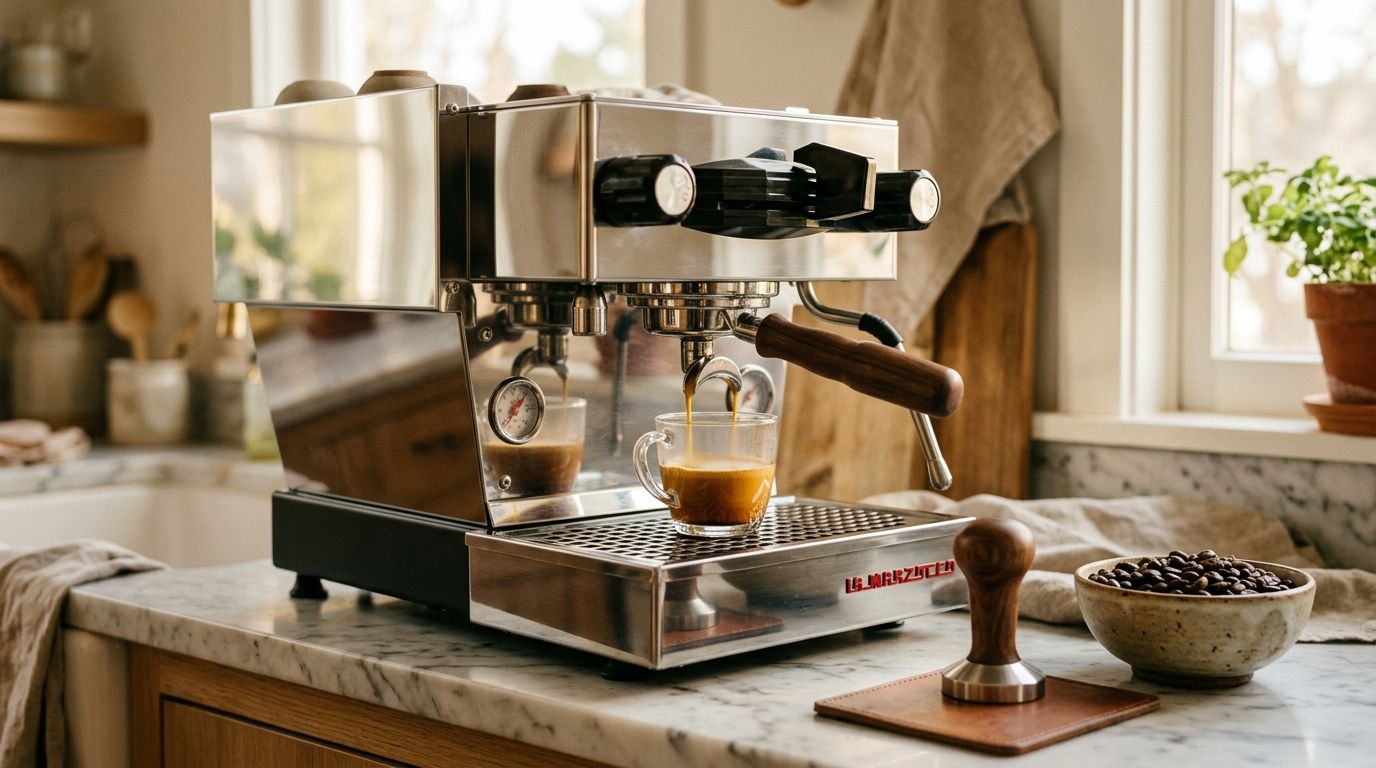
There is a quiet, meditative magic to the morning coffee ritual. The aroma of whole Arabica beans tumbling into a hopper, the low hum of precision burrs slicing through roasted coffee, the weight of a solid brass portafilter resting in your palm, and the hypnotic sight of a golden, hazelnut-colored stream gathering into a warm ceramic cup. When executed correctly, a homemade double shot of espresso carries a thick, tiger-striped crema, a velvety mouthfeel, and an aromatic intensity that rivals the finest specialty coffee houses in Milan, Melbourne, or Seattle.
Yet for countless home drinkers, the reality of home espresso falls painfully short. They buy an entry-level machine seduced by glossy marketing claims of 15-bar Italian pumps only to find themselves battling sour, watery liquid that tastes like lemon juice, or burnt, bitter sludge that no amount of frothed milk can rescue. Countertops become buried in stray grinds, lukewarm steam wands sputter water into cold pitchers, and the machine ends up collecting dust next to an old pod brewer because the daily workflow feels like an unpaid kitchen chore.
Espresso is not simply strong drip coffee; it is a delicate thermodynamic discipline. Producing exceptional espresso requires forcing water heated to an exact temperature (typically between 198°F and 202°F) through an evenly compacted bed of finely ground coffee under a controlled 9 bars of hydraulic pressure for 25 to 30 seconds. If any of those physical variables fluctuates: if water temperature drops five degrees mid-shot, if pump pressure spikes and fractures the coffee puck, or if your grind size lacks uniform particle distribution: the delicate emulsion of aromatic oils, dissolved sugars, and colloidal suspensions collapses.
To help you cut through the confusing marketing jargon and find a machine that fits your daily routine, counter space, and budget, this comprehensive guide evaluates the five best espresso machines on the market. We break down published engineering specifications, boiler thermodynamics, portafilter standards, and workflow ergonomics across five distinct buyer personalities.
The Thermodynamics and Fluid Dynamics of Real Espresso
To understand why one machine produces a rich, aromatic elixir while another delivers sour water, it helps to understand the physics occurring inside the filter basket. When hot water contacts finely ground coffee, it triggers a rapid dissolution process. The first compounds to extract are sour fruit acids and light salts, followed by sweet complex sugars and aromatic lipids (the heart of the cup), and finally heavy, astringent tannins and bitter polyphenols.
A balanced extraction dissolves between 18% and 22% of the coffee mass into the cup. If the water flows too quickly through loose grounds or channels, you get under-extracted, sharply sour coffee. If water lingers too long or runs too hot, it leaches astringent wood fibers that leave your mouth feeling dry and bitter.
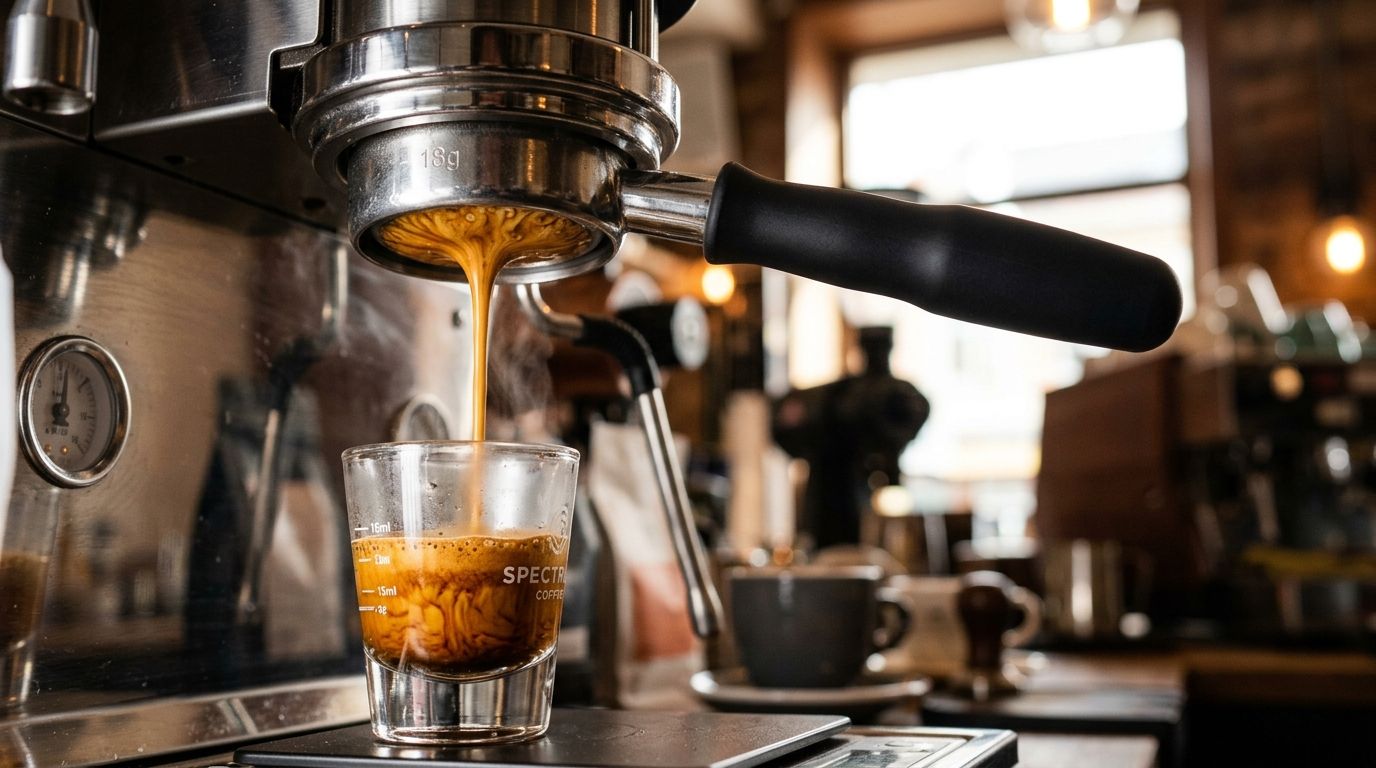
Achieving that sweet spot depends on four core engineering subsystems working in unison:
1. The 9-Bar Standard vs the 15-Bar Marketing Myth
Many affordable countertop machines proudly advertise 15-bar or 20-bar pumps imported from Italy. While those Ulka or Olab vibration pumps are indeed rated to produce up to 15 bars of pressure, running at that full hydraulic force during espresso extraction is destructive. At 15 bars, water forces fine particles into the bottom holes of the basket, blinding the filter, while high-velocity jets blast microscopic fissures through the puck. Water takes the path of least resistance, rushing through these fissures (channeling) while leaving adjacent coffee dry and unextracted.
Commercial espresso machines use an overpressure valve (OPV) calibrated to vent excess water back to the reservoir, maintaining an unwavering 9 bars at the grouphead. Flagship semi-automatics also incorporate low-pressure pre-infusion, wetting the dry puck at 2 to 4 bars for five to eight seconds so the coffee grinds swell evenly before the full 9-bar extraction begins.
2. Heating Architectures: Thermocoil vs Single Boiler vs Dual Boiler
Water temperature stability across the duration of a shot is vital. A shift of just 3 degrees Fahrenheit can alter flavor profiles from pleasant fruit brightness to sharp vinegar acidity. Three main heating systems dominate the market:
- Thermocoil / ThermoJet (Instant Heat): Water is pumped through a cast-aluminum block containing a spiral stainless steel tube and electric heating element. Cold water heats on contact within seconds. Modern ThermoJet systems (found in Breville machines) reach brewing temperature in an astonishing 3 seconds. The trade-off is limited thermal mass: steam is generated in short bursts rather than high-volume continuous dry vapor.
- Single Brass Boiler (Thermal Mass): A dedicated 250ml to 400ml brass or stainless steel tank holds water at extraction temperature. The substantial metal mass of the boiler and grouphead absorbs heat fluctuations, delivering exceptional shot-to-shot temperature stability. However, because steam requires 265°F and brewing requires 200°F, you must wait approximately 60 seconds for the boiler to heat up to steam milk, then purge water through the grouphead to cool it back down before pulling another shot.
- Dual Boiler (Commercial Capability): One boiler is maintained at exact brew temperature via a digital proportional-integral-derivative (PID) controller, while a second larger boiler stays at continuous steam pressure. This allows simultaneous pulling of double shots and high-velocity milk steaming with zero recovery time.
3. Portafilter Standards: 54mm vs Commercial 58mm
The portafilter is the handle and basket assembly that locks into the grouphead. Consumer machines generally feature either a 54mm diameter (popularized by Breville) or the commercial 58mm standard (invented by Faema in 1961). A 54mm basket is slightly deeper and narrower, which creates a thicker coffee puck that is more forgiving to minor tamping irregularities. A 58mm basket creates a wider, shallower puck that requires precise distribution needles (WDT) and uniform tamping, but allows for finer grinds that release richer complex aromas from lightly roasted specialty coffees.
The 5 Best Espresso Machines
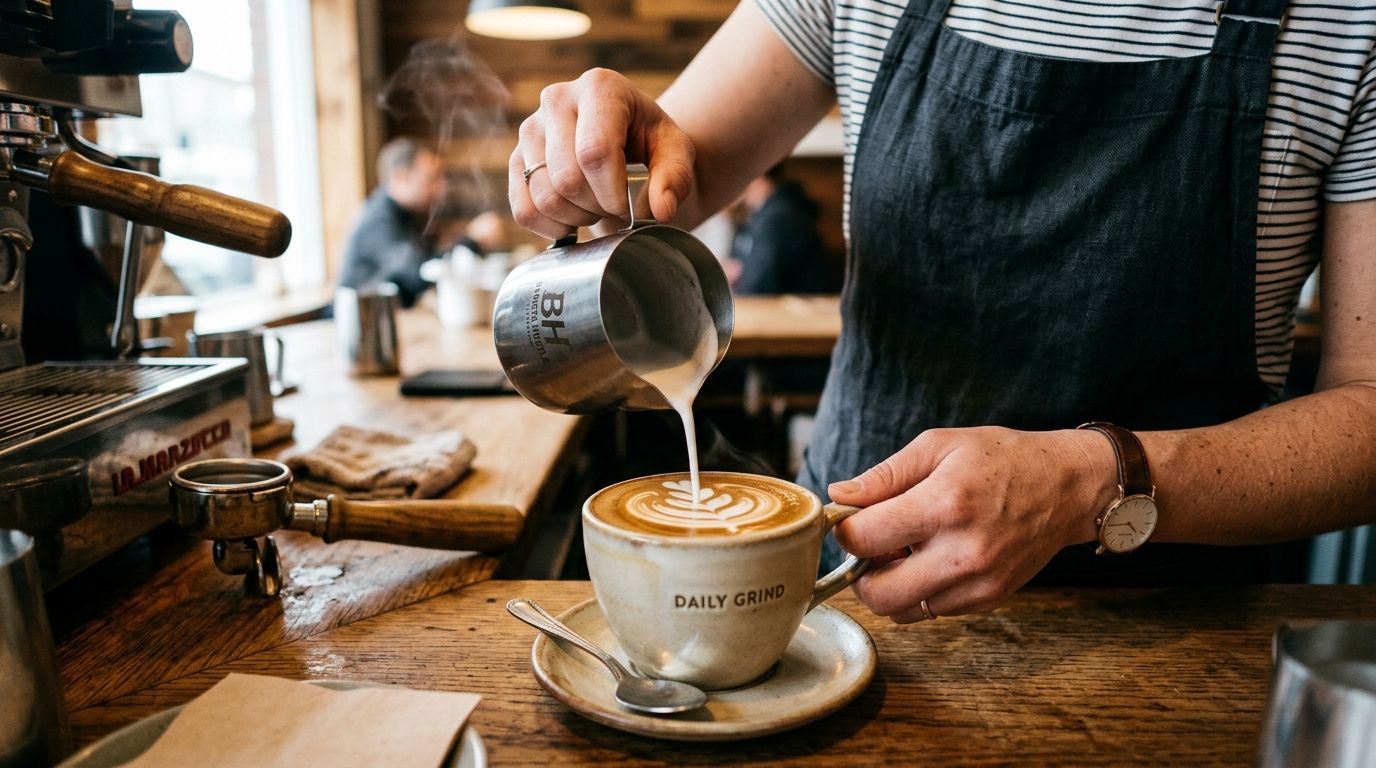
Whether your morning calls for one-touch automated microfoam, compact countertop efficiency, or commercial-grade manual temperature control, these five machines represent the standout setups for every routine and budget.
1. Breville Barista Touch Impress: Best Overall Home Barista Machine
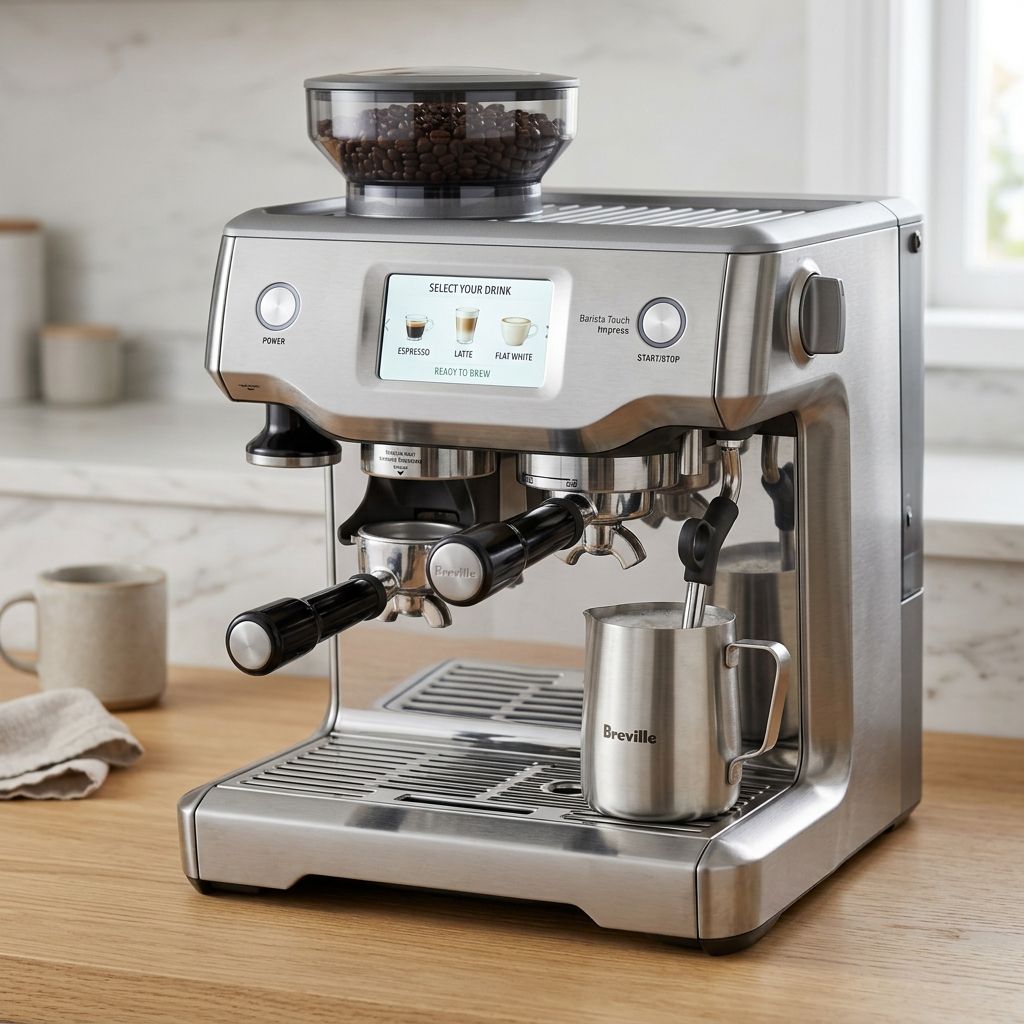
For the vast majority of households who crave authentic third-wave specialty drinks without turning their kitchen into a messy science experiment, the Breville Barista Touch Impress is the most complete all-in-one machine ever built. It tackles the two most common stumbling blocks in home espresso: dosing the exact gram weight of coffee and applying a perfectly level tamp without channeling.
Mounted on the left side of the chassis is the Impress Puck System. After grinding with the integrated Baratza European hardened steel conical burr grinder (featuring 30 stepped settings), you simply pull the spring-assisted lever forward. The mechanism applies an exact 22 pounds of downward tamping pressure to the coffee bed while delivering a 7-degree finishing twist: precisely mimicking a professional barista tamp. An intelligent sensor reads the height of the compacted puck. If the dose is slightly shallow or high, a digital indicator illuminates on the color touchscreen, and the machine automatically calculates and auto-corrects the grind duration for your next shot down to half a second.
Under the brushed stainless steel hood, the machine utilizes Breville's proprietary ThermoJet heating block, reaching exact brewing temperature (200°F) in just three seconds with virtually zero recovery time between shots. Extraction begins with low-pressure pre-infusion before ramping smoothly to 9 bars via a 15-bar Italian pump paired with an internal overpressure valve.
Milk texturing is equally revolutionary. The Auto MilQ steam wand features a built-in base temperature sensor that allows you to choose your desired drink temperature (from 113°F to 167°F) and texture level (eight distinct microfoam densities). Crucially, the firmware includes calibrated algorithm profiles specifically for alternative milks: dairy, oat, almond, and soy: compensating for the lower protein and fat structures of plant-based milks so they foam into silky latte art microfoam rather than separating into watery bubbles.
Key Specifications
- Heating Technology: Rapid ThermoJet instant heating block (3-second warm-up time)
- Grinder: Integrated Baratza precision European steel conical burr grinder (30 stepped settings)
- Puck Preparation: Assisted 22 lb mechanical tamp lever with 7-degree twist and auto-dosing memory
- Extraction Pressure: 15-bar Italian vibration pump regulated by an internal OPV to 9 bars
- Milk System: Auto MilQ hands-free automatic steam wand with plant milk profiles (oat, almond, soy, dairy)
- Interface: Full-color capacitive touchscreen with pre-programmed cafe favorites and custom drink memory
- Portafilter: 54mm stainless steel portafilter with dual-wall (pressurized) and single-wall baskets
- Water Reservoir: 67 fl oz (2.0 L) removable tank with integrated water filtration
What We Liked
- Assisted tamping lever completely eliminates stray coffee grinds on the counter and guarantees level compaction.
- Auto MilQ system produces cafe-grade silky microfoam on both dairy and oat milks with zero manual skill required.
- ThermoJet heats up in 3 seconds, letting you brew a fresh flat white before other machines finish booting.
- Baratza steel burrs deliver uniform grind distribution across medium, medium-dark, and dark roasts.
- Intelligent dose correction actively guides the user to dial in new bags of beans without wasting coffee.
Things to Consider
- Substantial countertop footprint requiring at least 13 inches of counter width and 16 inches of vertical clearance.
- Proprietary 54mm portafilter size means you cannot use commercial 58mm cafe accessories.
- Premium initial investment compared to manual standalone machines.
2. Breville Bambino Plus: Best Compact Standalone Machine
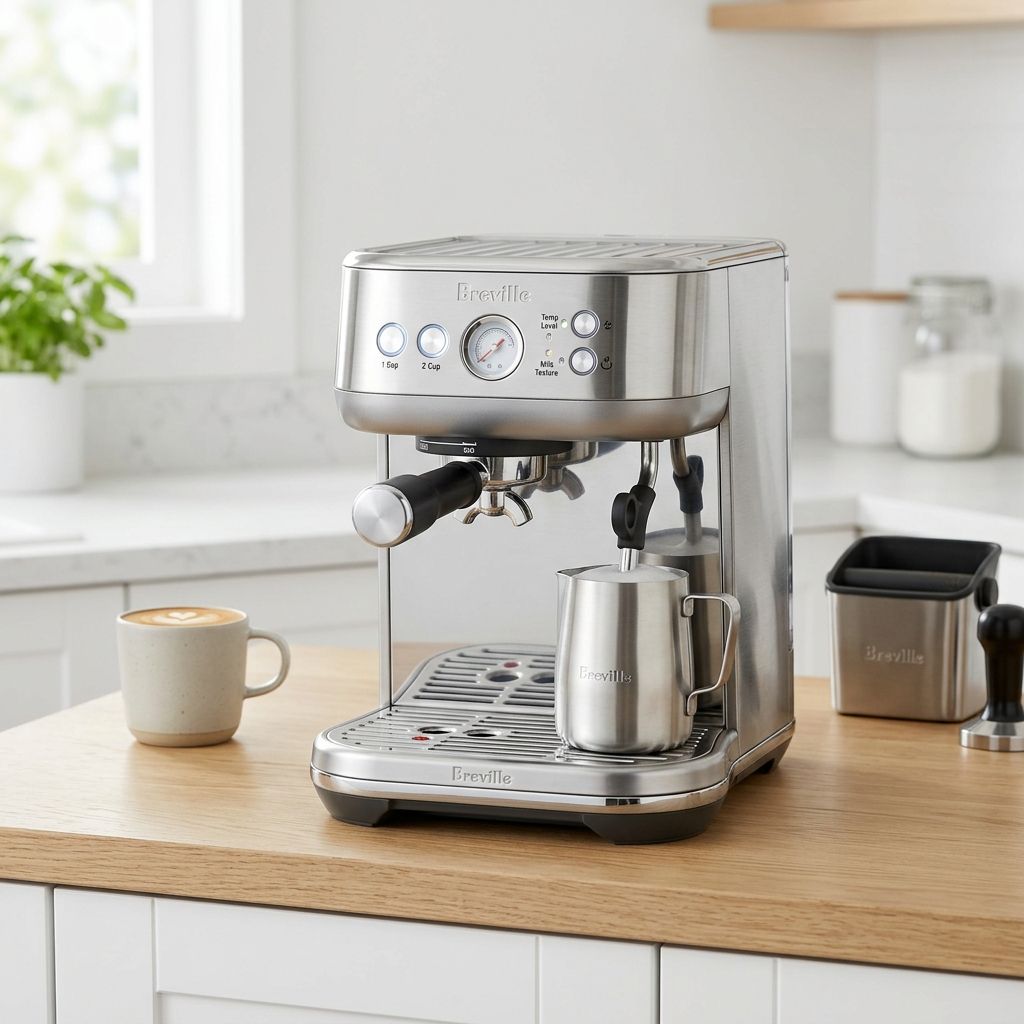
If your kitchen counter space is precious or you already own a high-performance standalone burr grinder, the Breville Bambino Plus delivers extraordinary extraction capability in an enclosure that measures just 7.7 inches wide. It strips away the built-in grinder and touchscreen of larger appliances while retaining the exact same high-end commercial extraction mechanics.
Like its flagship sibling, the Bambino Plus incorporates Breville's ThermoJet instant heating element. It is ready to pull a shot the instant you press the power button, saving precious minutes on busy weekday mornings. More importantly, it features an authentic commercial 3-way solenoid valve. When your extraction finishes, the valve vents internal pressure into the drip tray immediately. This leaves the 54mm portafilter containing a dry, solid coffee puck that knocks out into a waste box cleanly with a single tap, completely avoiding the wet, muddy slurry common in budget machines.
The automatic steam wand on the Bambino Plus is widely regarded as one of the best ever fitted to a compact machine. A temperature probe mounted directly in the drip tray platform monitors milk temperature in real time while the four-hole steam tip creates an intense texturing vortex. You can select from three temperature presets (Warm, Ideal, Hot) and three microfoam texture densities (Low, Medium, High). The moment you set down your stainless steel pitcher and press the steam button, the Bambino automatically textures glossy, sweet microfoam suitable for pouring rosettas and hearts, followed by an automatic self-purge cycle that blows clean steam through the wand when lowered.
Key Specifications
- Heating Technology: 3-second instant ThermoJet heating coil
- Extraction Pressure: Low-pressure pre-infusion followed by 9-bar extraction via OPV
- Depressurization: Commercial 3-way solenoid valve for dry puck knockouts
- Milk Texturing: Hands-free automatic steam wand with 3 temperature levels and 3 foam textures
- Portafilter Size: 54mm stainless steel portafilter with single and dual-wall baskets
- Footprint: Ultra-compact dimensions (7.7 in W x 12.6 in D x 12.2 in H)
- Water Capacity: 64 fl oz (1.9 L) rear-mounted removable reservoir
What We Liked
- Incredible 3-second warm-up time makes morning espresso faster than brewing a pod.
- Automatic milk frothing produces genuine, silky microfoam with zero manual technique required.
- 3-way solenoid valve keeps the puck dry and makes cleanup effortless.
- Exceptionally narrow 7.7-inch footprint easily tucks into studio apartments and crowded countertops.
- True low-pressure pre-infusion and 9-bar extraction yield sweet, balanced specialty espresso.
Things to Consider
- Requires a dedicated, high-quality standalone coffee grinder capable of fine espresso grinding.
- Because the machine is lightweight (approximately 11 lbs), you must hold the top of the machine when locking in the portafilter.
- The compact drip tray fills quickly and requires emptying after every few milk texturing sessions.
3. De'Longhi Dedica Deluxe (EC685M): Best Entry-Level Value for Beginners
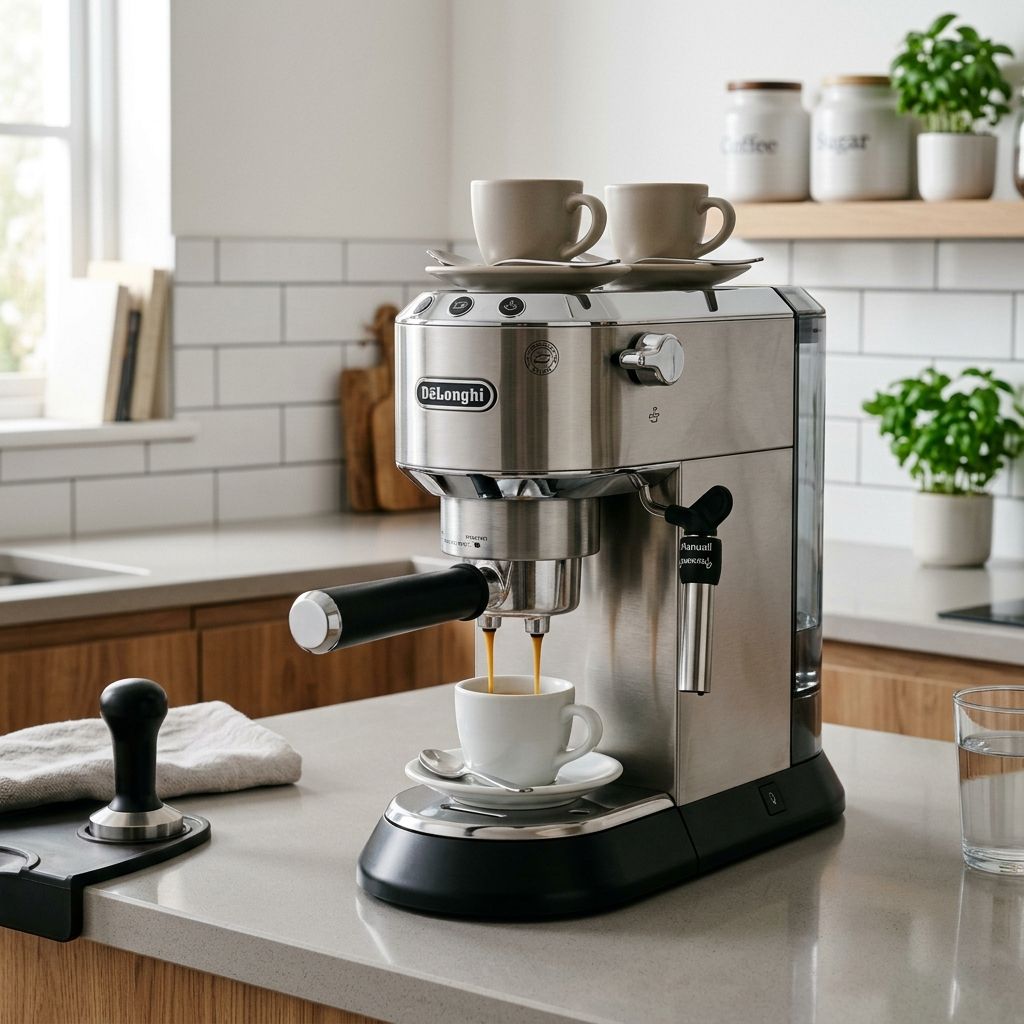
For consumers seeking their first true espresso maker without committing to a steep learning curve or spending hundreds of dollars on separate grinders and tampers, the De'Longhi Dedica Deluxe (model EC685M) has served as the gold standard introductory appliance for over a decade. Measuring an astonishing 5.9 inches wide, it occupies less counter space than a standard four-slice toaster.
The Dedica is engineered specifically to be forgiving with pre-ground coffee. Rather than requiring precision burr grinders and surgical tamping, it ships with pressurized dual-wall filter baskets (for single shots, double shots, and E.S.E. paper pods). Water passes through the coffee bed and is forced through a microscopic pinhole in the secondary bottom plate, creating mechanical aeration that yields a thick, persistent golden crema even from grocery store canned coffee.
Heating is handled by an efficient thermoblock system that reaches brewing temperature in roughly 35 to 40 seconds. The front panel keeps operation delightfully simple with three illuminated tactile buttons: single espresso, double espresso, and steam. On the right flank, the Deluxe version features an adjustable manual cappuccino frothing wand with a sliding collar: select "Cappuccino" for rich, airy foam on morning cappuccinos, or "Hot Milk" for a smoother latte texture.
While coffee purists will outgrow its pressurized baskets eventually, the Dedica has a massive global following because it is highly upgradeable. For under thirty dollars, owners can easily purchase an unpressurized 51mm bottomless portafilter and pair it with a manual hand grinder, unlocking genuine single-origin extraction as their barista skills develop.
Key Specifications
- Heating Technology: Rapid aluminum thermoblock (35-second warm-up)
- Pump Pressure: 15-bar Italian vibration pump
- Portafilter Standard: 51mm three-ear portafilter with pressurized crema baskets
- Pod Compatibility: Supports Easy Serving Espresso (E.S.E.) standardized paper coffee pods
- Dimensions: Extremely slim 5.9 in W x 13.0 in D x 12.0 in H
- Milk Frother: Adjustable manual Panarello steam wand (Cappuccino and Hot Milk settings)
- Water Tank: 35 fl oz (1.0 L) transparent rear reservoir
What We Liked
- Extremely affordable price point provides an accessible entry point to genuine espresso.
- Ultra-skinny 6-inch width fits on virtually any crowded kitchen counter or office desk.
- Pressurized baskets make decent, drinkable lattes with pre-ground supermarket coffee.
- Heats up and is ready to brew in under 40 seconds.
- Massive third-party aftermarket allows easy upgrades to unpressurized bottomless portafilters.
Things to Consider
- Pressurized baskets produce aerated froth rather than authentic emulsion crema.
- Lacks a 3-way solenoid valve, meaning portafilter cleanup is soupier and requires rinsing.
- Lightweight construction requires holding the machine steady when locking in the portafilter.
4. Gaggia Classic Pro (E24): Best for Mechanical Purists & Home Modders
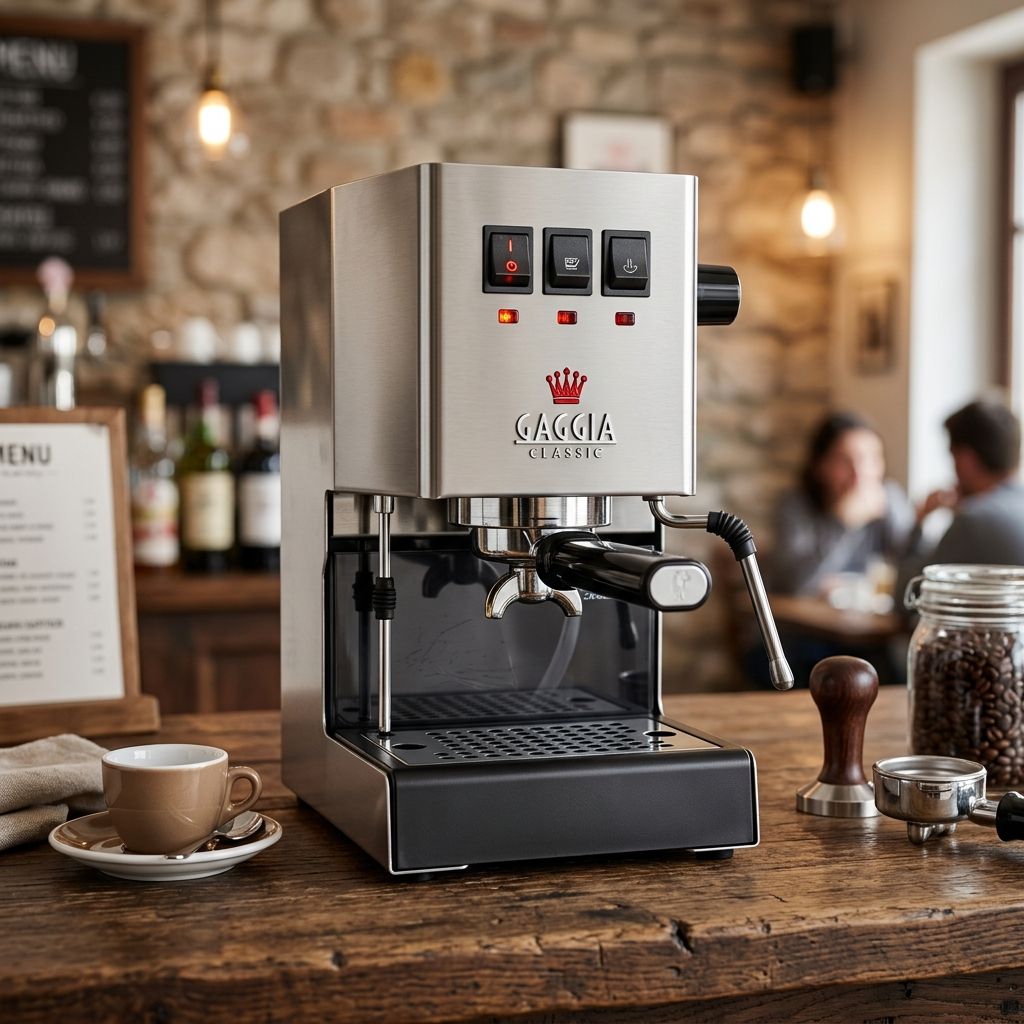
If you appreciate vintage Italian industrial design, tactile metal mechanical switches, and a machine constructed like a commercial tank rather than disposable consumer electronics, the Gaggia Classic Pro is an enduring legend. Handcrafted in Gaggio Montano, Milan, the Classic has been the benchmark entry into authentic cafe-standard espresso for more than thirty years.
The defining virtue of the Gaggia Classic Pro is its commitment to commercial standard components. While mass-market appliances use lightweight aluminum or plastic collars, the Gaggia is built around a heavy commercial 58mm chrome-plated brass grouphead and portafilter weighing well over a pound. The thermal mass of that brass locks in water temperature the moment water enters the coffee bed, preventing thermal shock.
It features a traditional commercial 3-way solenoid valve with a distinct stainless steel discharge tube extending into the left side of the drip tray. The moment you flip off the brew rocker switch, internal pressure vents loudly into the tray, drying the puck for a crisp, effortless knockbox release. Steam power is handled by a commercial two-hole stainless steel steam wand that delivers dry, high-velocity vapor capable of texturing competition-grade microfoam once you master the manual tilt angle.
The interface is refreshingly mechanical: three chunky rocker switches for Power, Brew, and Steam, illuminated by red indicator lights. There are no touchscreens to fail, no delicate circuit boards to fry from electrical surges, and every internal component: from the brass boiler to the Ulka pump and OPV valve: is fully accessible with standard screwdrivers. For home baristas who enjoy upgrading machines with PID controllers, 9-bar OPV springs, and dimmer switches for flow profiling, the Gaggia Classic Pro offers an unmatched global community of enthusiasts and modular replacement parts designed to keep the machine running for twenty years.
Key Specifications
- Chassis & Metallurgy: Heavy brushed stainless steel housing made in Milan, Italy
- Grouphead: Commercial 58mm chrome-plated brass grouphead and commercial portafilter
- Heating Unit: Traditional single aluminum/brass boiler with dual external heating elements
- Valving: Heavy-duty commercial 3-way solenoid valve with stainless discharge tube
- Steam Wand: Commercial-grade two-hole articulating stainless steel steam wand
- Controls: Three heavy mechanical rocker switches with independent indicator lamps
- Water Capacity: 72 fl oz (2.1 L) large front-accessible water reservoir
What We Liked
- Authentic commercial 58mm grouphead grants access to hundreds of barista accessories and precision baskets.
- Indestructible brushed stainless steel housing built to last decades of daily use.
- Commercial 3-way solenoid valve produces firm, bone-dry coffee pucks that knock out cleanly.
- Two-hole commercial steam wand delivers professional milk steaming power once mastered.
- Incredible community support, modular replacement parts, and easy repairability.
Things to Consider
- Requires temperature surfing technique (flushing water) unless retrofitted with an aftermarket digital PID controller.
- Traditional single boiler requires a 10 to 15 minute initial warm-up to heat the heavy brass grouphead thoroughly.
- Factory calibration is set to 12 bars to support pressurized baskets; enthusiasts frequently swap the OPV spring to 9 bars.
5. Profitec Go: Best High-End Prosumer Single Boiler for Temperature Precision
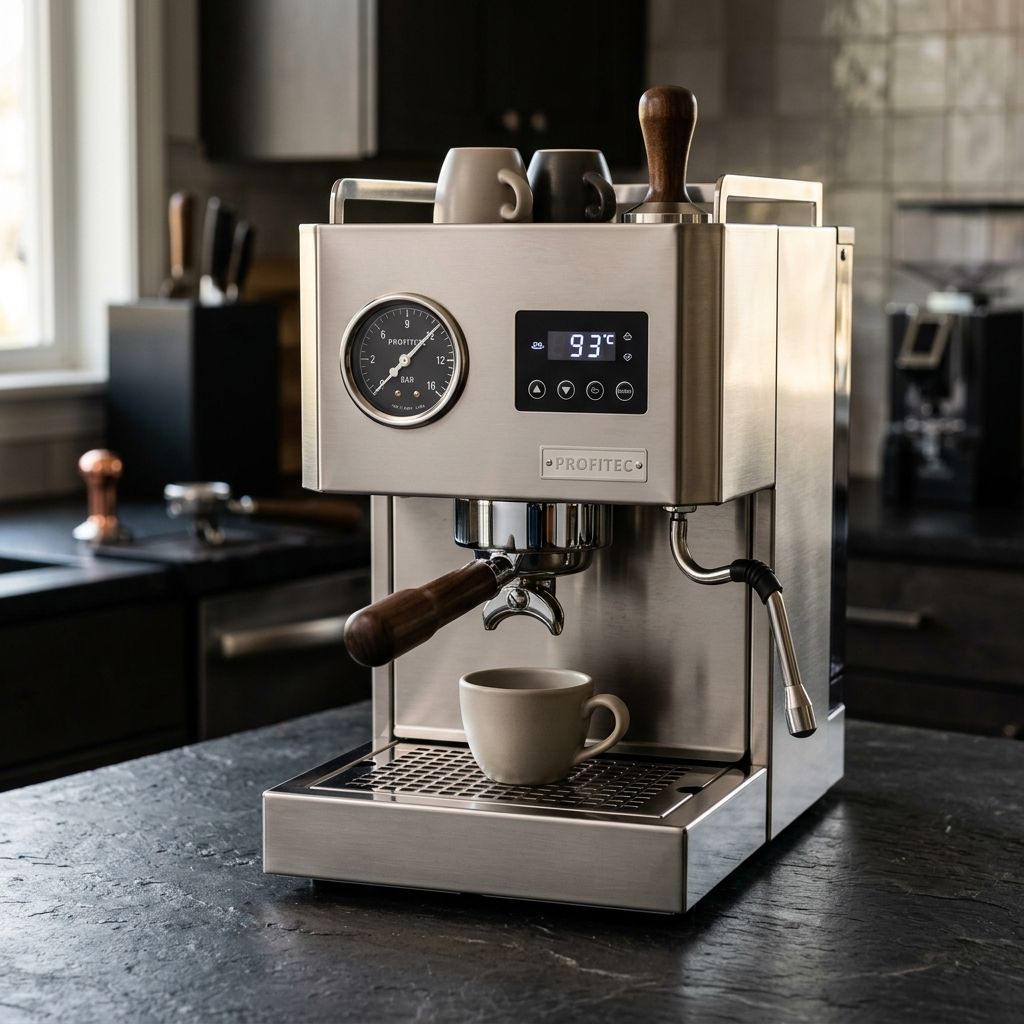
For the specialty coffee connoisseur who drinks lightly roasted, fruit-forward single-origin Ethiopian, Kenyan, or Colombian beans, minor thermal instability can ruin an extraction. If you want uncompromising surgical precision without spending thousands of dollars on a giant dual-boiler rig, the Profitec Go represents the absolute pinnacle of prosumer single-boiler engineering.
Designed in Heidelberg, Germany, and manufactured in Italy, the Profitec Go solves the biggest flaw of traditional single-boiler machines: temperature guessing. Dominating the upper right faceplate is an illuminated digital OLED PID display. This controller allows you to adjust the brew temperature to single-degree increments (e.g. 199°F for a dark roast, 204°F for a dense light roast). The PID controller also doubles as an automatic live digital shot timer that counts extraction seconds the moment you activate the brew switch, allowing you to hit exact brew recipes without glancing at a phone stopwatch.
On the left side of the panel sits a large, analog brew pressure manometer gauge displaying exact bar pressure at the puck. If you notice your extraction pressure running high or low, you do not need to disassemble the chassis. Profitec integrated an externally adjustable overpressure valve (OPV) beneath the cup warmer tray. A quick turn with a standard flathead screwdriver tunes your extraction pressure precisely between 8.5 and 10 bars.
Its 0.4-liter brass boiler is paired with an intelligent Fast Heat-Up mode that brings the heavy commercial 58mm grouphead to full thermal saturation in just 5 to 7 minutes. When transitioning to steam, the PID display shows the rising steam boiler temperature and alerts you the second it reaches full 265°F pressure, delivering intense, dry commercial steam that textures microfoam in twenty seconds flat.
Key Specifications
- Temperature Regulation: Precision digital OLED PID controller adjustable to 1°F / 1°C increments
- Shot Timing: Integrated digital extraction timer counting elapsed seconds automatically
- Pressure Diagnostics: Analog boiler brew pressure gauge (manometer) on the front panel
- Overpressure Valve: Externally accessible brass OPV screw for customized pressure tuning
- Boiler Architecture: 0.4 L insulated brass boiler with 5-7 minute Fast Heat-Up mode
- Grouphead: Heavy commercial-grade 58mm chrome-plated brass group with ergonomic dual-spout portafilter
- Cleaning Protocols: Programmable automatic backflush reminder and energy-saving eco timer
- Water Capacity: 95 fl oz (2.8 L) massive top-loading water reservoir
What We Liked
- Single-degree PID temperature control extracts vibrant sweetness from delicate light roasts that confound other machines.
- Integrated shot timer and pressure gauge provide instant scientific feedback on grind calibration.
- Externally adjustable OPV allows quick pressure calibration without opening the housing.
- Heats up to full thermal stability in just 5 to 7 minutes, remarkably fast for a brass boiler.
- Flawless German build quality with clean internal wiring and heavy stainless steel panels.
Things to Consider
- As a single-boiler machine, you cannot brew espresso and steam milk simultaneously.
- Requires a dedicated prosumer flat-burr or high-end conical grinder to exploit its extraction precision.
- Higher investment price point tailored for passionate coffee connoisseurs.
Comparison of the Top 5 Espresso Machines
The table below compares the foundational engineering metrics across all five recommended models so you can quickly identify the machine that aligns with your counter dimensions, workflow preferences, and budget:
| Model | Heating System | Warm-Up Time | Portafilter | Grinder | Milk Texturing | Ideal Drinker |
|---|---|---|---|---|---|---|
| Breville Barista Touch Impress | ThermoJet Coil | 3 Seconds | 54mm Stainless | Integrated Baratza Steel Burrs (30 settings) | Auto MilQ (Dairy & Plant Milk Modes) | Busy households wanting specialty drinks with zero mess |
| Breville Bambino Plus | ThermoJet Coil | 3 Seconds | 54mm Stainless | None (Requires Standalone) | Auto Purge Microfoam (3 Temp / 3 Texture) | Small kitchens & owners of dedicated grinders |
| De'Longhi Dedica Deluxe | Thermoblock | 35 Seconds | 51mm Pressurized | None (Pre-ground Friendly) | Manual Panarello (Cappuccino & Hot Milk) | Budget-conscious beginners stepping up from pods |
| Gaggia Classic Pro (E24) | Single Boiler | 10–15 Minutes | Commercial 58mm Brass | None (Requires Standalone) | Commercial 2-Hole Manual Steam Wand | Mechanical purists, tinkerers, and Italian cafe fans |
| Profitec Go | Insulated Brass Boiler | 5–7 Minutes | Commercial 58mm Brass | None (Requires Standalone) | Commercial High-Pressure Steam Wand | Light-roast specialty connoisseurs demanding PID accuracy |
How to Choose the Right Machine for Your Morning Routine
Selecting an espresso machine is not about buying the model with the longest list of features; it is about choosing the appliance that harmonizes with your morning habits, your available kitchen counter space, and your willingness to learn the barista craft:
Choose the Breville Barista Touch Impress if:
You want exceptional lattes, cappuccinos, and Americanos with minimal friction. If your household has multiple coffee drinkers with varying preferences (including oat or almond milk drinkers), the assisted 22 lb tamping lever eliminates messy grinds and tamping mistakes entirely. It delivers 90% of a specialty coffee shop experience with 10% of the manual effort.
Choose the Breville Bambino Plus if:
You have a small apartment kitchen, want instant 3-second morning speed, and prefer pairing your machine with a high-end dedicated grinder (such as a Baratza Encore ESP or DF54). It gives you commercial-grade microfoam and true 9-bar pre-infusion in a footprint smaller than a shoe box.
Choose the De'Longhi Dedica Deluxe if:
You are watching your budget, transitioning away from costly pod capsules, and want to brew decent morning coffee using pre-ground beans. Its pressurized baskets forgive uneven grinds, and its tiny 5.9-inch profile fits anywhere.
Choose the Gaggia Classic Pro if:
You love the sensory, mechanical ritual of pulling espresso. You want an authentic commercial 58mm heavy brass portafilter, rugged tactile switches, and an indestructible Italian chassis that you can repair, modify, and cherish for decades.
Choose the Profitec Go if:
You are an uncompromising coffee hobbyist. If you regularly buy $22 bags of light roast single-origin beans and want to dial in water temperature down to 1°F, monitor brew pressure on a commercial manometer gauge, and time extractions to the tenth of a second, the Profitec Go provides commercial lab precision in a sleek desktop package.
Water Chemistry and Maintenance: Protecting Your Investment
The greatest enemy of an espresso machine is not physical wear on mechanical switches; it is mineral scale. Water heated above 140°F causes dissolved calcium and magnesium to precipitate out of solution, forming hard calcium carbonate crystals inside narrow boiler tubes, flow meters, and three-way solenoid valves.
To ensure your machine lasts for years of daily service, follow these three non-negotiable maintenance rules:
- Never Use Pure Distilled or Unmineralized RO Water: Pure mineral-free water is chemically aggressive and will corrode copper and brass boiler fittings. More importantly, water level sensors inside brass boilers rely on electrical conductivity through dissolved minerals; distilled water causes boilers to overfill or run dry. Use filtered water with roughly 75 to 125 ppm total dissolved solids (TDS).
- Backflush with Cafiza Every 30 to 45 Days: For machines equipped with a 3-way solenoid valve (Barista Touch Impress, Bambino Plus, Gaggia Classic Pro, Profitec Go), place a solid rubber blind disc into the portafilter basket with a half-teaspoon of Cafiza espresso machine detergent. Run five 10-second brew cycles. The detergent dissolves rancid coffee oils and old grounds baked into the shower screen and vents them through the solenoid exhaust.
- Wipe and Purge the Steam Wand Immediately: The moment you finish texturing milk, take a damp microfiber cloth and wipe down the exterior stainless steel wand. Immediately open the steam valve for two seconds to blow out any milk droplets sucked into the nozzle holes. Allowing milk to dry inside a steam wand creates foul odors, harbors bacteria, and clogs the steam tip orifices.
The Bottom Line
Investing in a quality espresso machine pays handsome dividends in daily joy, culinary discovery, and financial savings. Replacing two daily five-dollar coffee shop drinks pays off a high-end machine setup in less than eight months.
For the vast majority of households, the Breville Barista Touch Impress is the undisputed champion: its assisted tamping mechanism, intelligent dosing memory, and automated plant-milk microfoam remove every common point of morning frustration while pulling rich, sweet, balanced double shots. If you already have a grinder and want a space-saving powerhouse, the Breville Bambino Plus packs commercial 9-bar pre-infusion and auto-steaming into a tiny 7.7-inch frame. If you are watching your budget, the De'Longhi Dedica Deluxe offers a proven, forgiving stepping stone under $300. And for the passionate purist, the Italian Gaggia Classic Pro and German Profitec Go offer commercial 58mm brass engineering built to satisfy the most demanding coffee connoisseur for decades to come.
Frequently Asked Questions
Commercial espresso standards were established in Italy during the 1940s when Achille Gaggia invented the lever piston. Extensive fluid dynamics research demonstrates that 9 bars (approximately 130 PSI) is the optimal hydraulic pressure to force water evenly through a finely ground coffee bed without causing structural fracture (channeling). While consumer manufacturers frequently advertise 15-bar or 20-bar Italian vibration pumps, that number merely describes the maximum potential pressure the pump motor can produce when blocked completely. In practice, high-end machines incorporate an internal overpressure valve (OPV) that bleeds excess pressure down to a steady 9 bars. Brewing at raw 15-bar pressure crushes the coffee puck, punches high-velocity channels through weak spots, and results in harsh, astringent, and watery espresso.

Elena Rostova
Author, Kitchen & Dining
Elena Rostova covers countertop appliances, cookware, and everyday kitchen essentials. She focuses on clear specifications, build quality, and real-world cooking performance to help home cooks choose the right tools for their kitchen.