

How the Galaxy S24 Ultra and S24 Compare in Daily Use
Choosing between Samsung top two conventional smartphones in 2026 comes down to hardware priorities rather than basic performance. Both the standard Galaxy S24 and the Galaxy S24 Ultra share a common software foundation: Samsung One UI 6.1 with on-device Galaxy AI tools, dynamic LTPO AMOLED displays peaking at 2,600 nits, and a guaranteed policy of seven generations of Android OS upgrades and security patches extending to 2031. For standard daily workflows like browsing, navigation, media streaming, and communication, both devices deliver immediate, fluid responsiveness.
However, there is a substantial five-hundred-dollar difference between their original manufacturer starting prices ($799 for the 128GB base S24 versus $1,299 for the 256GB Ultra). That price gap reflects two fundamentally different hardware concepts: a compact, lightweight everyday flagship versus an expansive mobile productivity workstation.
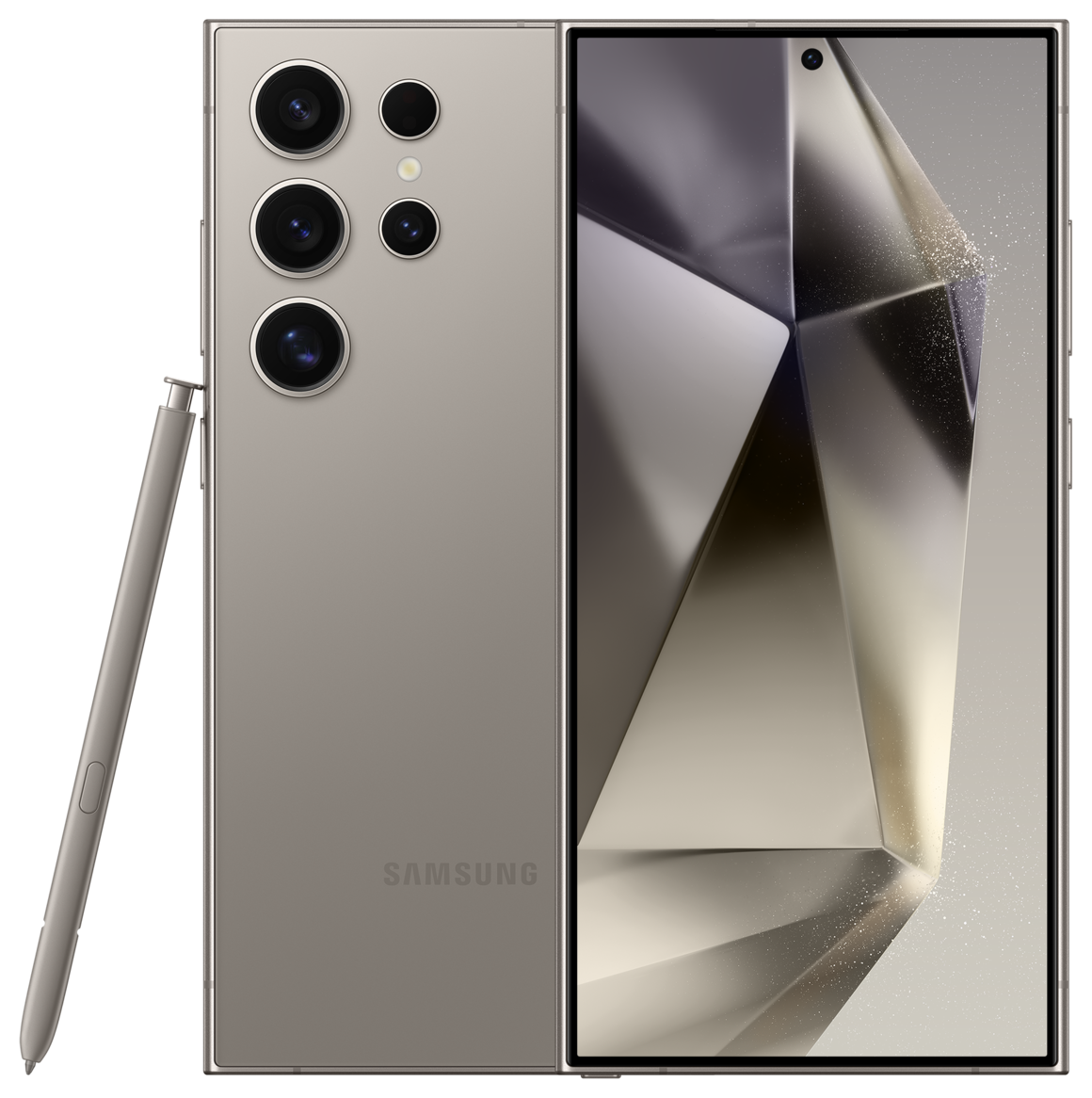
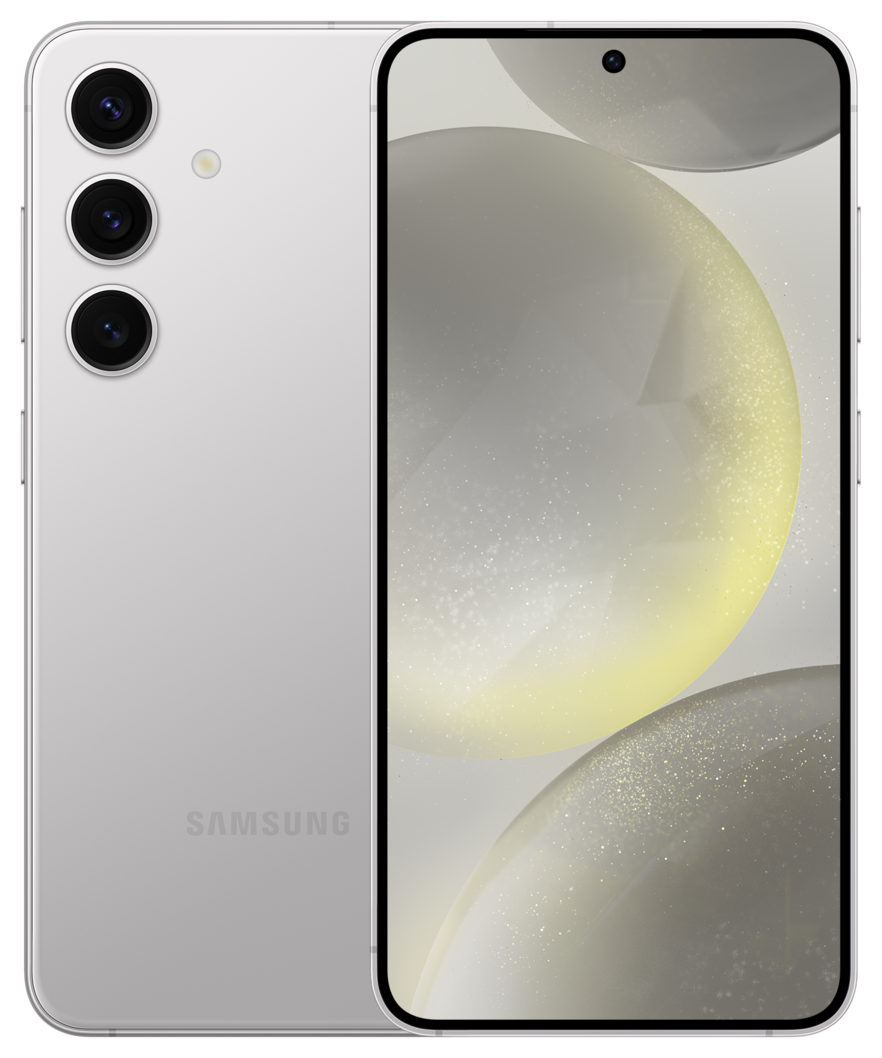
The Galaxy S24 Ultra is an unapologetic, high-density device. It integrates Grade 2 titanium side rails, an embedded active stylus, a larger battery, and Samsung most advanced multi-lens camera array with an optical periscope zoom. The standard Galaxy S24 focuses on one-handed comfort, lightweight ergonomics, and clean portability, slipping into pockets effortlessly while retaining the primary flagship computing engine.
What Are the Main Differences Between the Galaxy S24 Ultra and S24?
While both models belong to the same generation, Samsung established clear physical and component separations:
- Weight and Physical Mass: The Ultra weighs 232 grams (8.18 ounces) with dimensions of 162.3 x 79.0 x 8.6 mm. The base S24 weighs 167 grams (5.89 ounces) with dimensions of 147.0 x 70.6 x 7.6 mm. The base S24 is 65 grams (roughly 28 percent) lighter and 8.4 millimeters narrower, making it far easier to operate with one hand.
- Chassis Materials and Edge Geometry: The Ultra features Grade 2 titanium side rails with right-angle corners. The base S24 uses satin Armor Aluminum with gently rounded, palm-friendly corners.
- Display Size and Glass Coating: The Ultra features a 6.8-inch QHD+ (3120 x 1440, 505 ppi) screen with Corning Gorilla Armor, a specialized glass that Corning states reduces ambient surface reflections by up to 75 percent. The base S24 features a 6.2-inch FHD+ (2340 x 1080, 416 ppi) screen covered with standard Gorilla Glass Victus 2. Both screens support 1Hz to 120Hz LTPO adaptive refresh rates and 2,600 nits peak brightness.
- Camera Configurations: The Ultra features a quad rear setup: a 200MP main wide sensor, a 50MP 5x optical periscope telephoto, a 10MP 3x optical telephoto, and a 12MP ultrawide. The base S24 features a triple setup: a 50MP main wide sensor, a 10MP 3x optical telephoto, and a 12MP ultrawide.
- Integrated Stylus: The Ultra houses a built-in Bluetooth S Pen in an internal spring-loaded silo. The base S24 has no digitizer hardware and does not support S Pen input.
- Battery Capacity and Charging Protocols: The Ultra includes a 5,000 mAh battery supporting up to 45W wired charging (USB PD 3.0 PPS). The base S24 includes a 4,000 mAh battery supporting up to 25W wired charging. Neither device includes a wall charger in the retail box.
- Regional Processor Variations: The Ultra uses Qualcomm Snapdragon 8 Gen 3 for Galaxy globally. The base S24 uses Snapdragon 8 Gen 3 for Galaxy in the United States, Canada, and China, while international editions feature Samsung Exynos 2400.
- System RAM and Storage Tiers: The Ultra comes standard with 12GB of LPDDR5X RAM and starts at 256GB of UFS 4.0 storage (with 512GB and 1TB options). The base S24 includes 8GB of RAM, starting at 128GB (UFS 3.1) or 256GB (UFS 4.0).
How Do Their Cameras, Displays, Performance, and Battery Life Compare?
1. S24 vs. S24 Ultra Size and Weight: Is the Ultra Too Big for One-Handed Use?
Daily physical handling represents the most immediate functional difference between these devices. At 79 millimeters in width and 232 grams, the Galaxy S24 Ultra is a substantial phone that generally necessitates two-handed operation for typing and reaching top-of-screen interface elements. In contrast, the standard Galaxy S24 measures 70.6 millimeters across and weighs 167 grams, allowing typical adult palm spans to navigate the keyboard and notification shade with a single thumb.
Both displays feature Dynamic LTPO AMOLED 2X panels that reach an identical 2,600 nits of peak brightness under sunlight. However, outdoor readability differs noticeably because of cover glass technology.
The base S24 uses Corning Gorilla Glass Victus 2, which exhibits the typical reflective glare common to modern smartphone displays in bright direct sunlight. The Ultra incorporates Corning Gorilla Armor, which utilizes a multi-layer anti-reflective optical coating. Corning published data demonstrates that this glass reduces ambient surface reflections by up to 75 percent. Under bright outdoor sunlight or harsh indoor overhead lighting, dark UI elements on the Ultra retain deeper black levels and higher contrast, allowing content and maps to be read clearly without relying as heavily on maximum backlight output.
2. S24 Ultra vs. S24 Camera Differences: 3x Optical vs. 5x Periscope Zoom
Under standard daylight conditions at 1x magnification, both smartphones deliver balanced exposures, rich color saturation, and dependable dynamic range. Samsung image processing pipeline outputs punchy, contrast-rich images from both the Ultra 200MP sensor and the base S24 50MP sensor, both binning down to roughly 12.5MP images by default.
The key photographic divergences center on sensor size and telephoto reach:
- Main Sensor Dimensions: The Ultra uses a 1/1.3-inch sensor, whereas the base S24 uses a 1/1.56-inch sensor. The larger physical surface area of the Ultra sensor captures more total light, providing cleaner shadow detail and lower sensor noise in low-light environments.
- Mid-Range Zoom (3x): Both smartphones include a dedicated 10MP 3x optical telephoto lens (67mm equivalent) with optical image stabilization, capturing crisp, flattering portraits of people and pets with natural optical compression.
- Long-Range Zoom (5x to 10x): Here, hardware separation is significant. The Ultra integrates a dedicated 50MP 5x optical periscope lens (111mm equivalent). At 5x, the Ultra captures native optical detail. At 10x, it uses an in-sensor crop of that high-resolution 50MP sensor alongside multi-frame processing to maintain crisp edges. The base S24 lacks a periscope mechanism; any magnification beyond 3x relies on digital cropping from its 10MP sensor, which introduces visible softness and artifacting at 5x and 10x.
- Extreme Zoom (30x to 100x): The base S24 maxes out at 30x digital zoom, while the Ultra scales up to 100x Space Zoom. Beyond 30x magnification, digital interpolation and algorithmic sharpening become noticeable on both devices. While the Ultra 30x setting can resolve distant signage, transit monitors, and stage performers effectively, extreme digital zoom remains primarily a situational utility rather than a tool for high-fidelity photography.
3. S24 Exynos vs. S24 Ultra Snapdragon: Performance and RAM Differences
In North America and China, both models run on the Qualcomm Snapdragon 8 Gen 3 for Galaxy, an octa-core 4nm processor featuring an overclocked prime Cortex-X4 core running up to 3.39 GHz. In European and international markets, the standard S24 is powered by Samsung 10-core Exynos 2400 processor. Independent benchmarks demonstrate that while both platforms provide fast daily app loading and smooth navigation, the Snapdragon platform maintains a slight advantage in sustained GPU graphical efficiency.
Sustained workload stability also benefits from the Ultra physical volume. Samsung equipped the Ultra with a vapor chamber 1.9 times larger than the previous generation, paired with greater overall surface area to radiate heat. During extended 3D gaming or continuous 4K video recording, the Ultra maintains stable frame rates longer before thermal management protocols dial back processing clock speeds. The base S24 more compact enclosure has less thermal mass, causing it to initiate thermal throttling earlier during extended heavy computation.
In memory capacity, the Ultra provides 12GB of LPDDR5X RAM standard, while the base S24 provides 8GB. For current Android multitasking, 8GB handles multiple browser tabs and background applications efficiently. However, the Ultra 12GB allocation offers greater headroom for caching background tasks as system requirements expand over Samsung seven-year software upgrade window, which extends support through early 2031.
Core Galaxy AI tools, including Circle to Search, Live Call Translation, Voice Recorder transcriptions, and Generative Photo Editing, are integrated into One UI 6.1 across both devices. Prospective buyers should note that feature availability depends on software updates, network connectivity, and an active Samsung account for cloud-processed operations.
4. S24 vs. S24 Ultra Battery Life and 45W vs. 25W Charging Speeds
The Galaxy S24 Ultra houses a 5,000 mAh battery cell, while the standard S24 contains a 4,000 mAh cell. Samsung published specifications rate the Ultra for up to 30 hours of video playback compared to 29 hours on the base S24.
In everyday use, the 25 percent greater battery capacity on the Ultra provides a substantial safety margin for intensive usage scenarios like turn-by-turn GPS navigation, mobile hotspot broadcasting, and multi-hour video recording. The base S24 comfortably covers typical workdays consisting of messaging, audio streaming, and intermittent social media browsing, but heavier usage cycles will require a top-up before late evening.
For charging, the Ultra supports up to 45W wired charging, while the base S24 supports up to 25W. Both require chargers compatible with USB Power Delivery 3.0 PPS protocols, and neither phone includes a charging adapter in the box. In published charging curve analyses, the 45W protocol provides its main speed benefit during the lower battery percentages:
- 0 to 50 Percent: The Ultra reaches roughly 50 percent in approximately 20 minutes when paired with a compatible 45W PPS charger. The base S24 reaches 50 percent in roughly 28 minutes with a 25W charger.
- 0 to 100 Percent: As lithium-ion batteries approach saturation, charging wattage decreases to manage cell temperatures. A full charge takes roughly 65 minutes on the Ultra versus approximately 75 minutes on the base S24. The total difference is around 10 minutes, meaning charging wattage alone should not be a primary deciding factor.
The S Pen: Technical Capabilities and Daily Relevance
The integrated S Pen stylus is a defining hardware feature of the Ultra, housed inside an internal silo with an active digitizer supporting 4,096 levels of pressure sensitivity.
For specific user workflows, the S Pen provides practical utility:
- Signing and annotating PDF contracts and forms directly on the 6.8-inch display without printing.
- Precision editing in photo applications, such as fine object selection and lasso adjustments.
- Screen-Off Memo functionality: ejecting the pen while the screen is locked to write quick notes that save directly to Samsung Notes.
- Bluetooth LE remote control: clicking the stylus button to trigger the camera shutter or advance presentation slides from a distance.
However, buyers should evaluate their personal workflow realistically. Users who do not routinely sketch, mark up documents, or take handwritten digital notes often find that the stylus remains docked in the chassis. For those users, the hardware silo adds physical volume and weight without delivering daily functional return.
Is the Galaxy S24 Ultra Worth $500 More Than the Base S24?
From a strict price-to-performance perspective, the standard Samsung Galaxy S24 represents the more balanced investment for typical consumers. At an original launch price of $799, it provides the same core Snapdragon processor in North America, the same 2,600-nit display brightness, the same seven-year update commitment, and dependable 50MP camera performance at a five-hundred-dollar savings compared to the Ultra.
The extra five hundred dollars for the Ultra purchases tangible, specialized hardware: Grade 2 titanium construction, anti-reflective Gorilla Armor glass, a 50MP 5x periscope telephoto lens, a larger 5,000 mAh battery, 12GB of standard RAM, and an integrated S Pen.
Choose the Samsung Galaxy S24 Ultra if:
- You require dedicated telephoto zoom: You attend concerts, sporting events, or travel frequently and need optical 5x and hybrid 10x clarity to capture distant subjects without digital degradation.
- You frequently work outdoors: You are a field professional, inspector, or contractor who needs to read detailed blueprints, documents, or maps under direct sunlight with minimal glare.
- You need maximum battery capacity: You travel often or work long shifts away from power outlets and require the safety margin of a 5,000 mAh battery cell.
- You actively utilize a digital stylus: You need an embedded pen for digital document signatures, precision drawing, or remote camera control.
Choose the Standard Samsung Galaxy S24 if:
- You prioritize one-handed comfort and portability: You want a compact, 167-gram smartphone that navigates easily with one thumb and fits into any pocket without noticeable bulk.
- You want optimal value: You want top-tier processing speeds, vibrant display quality, and seven years of software support while keeping five hundred dollars in your budget.
- Your photography is primarily everyday snapshots: You capture standard daylight photos, family moments, pets, and food, where the 50MP main camera and 3x optical telephoto provide clean, vibrant results.
- You are upgrading from an older compact device: If you are transitioning from a Galaxy S20, S21, or standard iPhone, the base S24 maintains a familiar physical footprint while delivering substantial upgrades in screen brightness, battery life, and processing efficiency.
The Bottom Line: Which Phone Should You Buy?
If your daily routine does not specifically demand dedicated 5x periscope zoom, anti-reflective screen glass, or an integrated digital stylus, the standard Galaxy S24 is the more sensible and practical purchase. It delivers the core flagship smartphone experience in a lighter, hand-friendly design at a significantly lower price point.