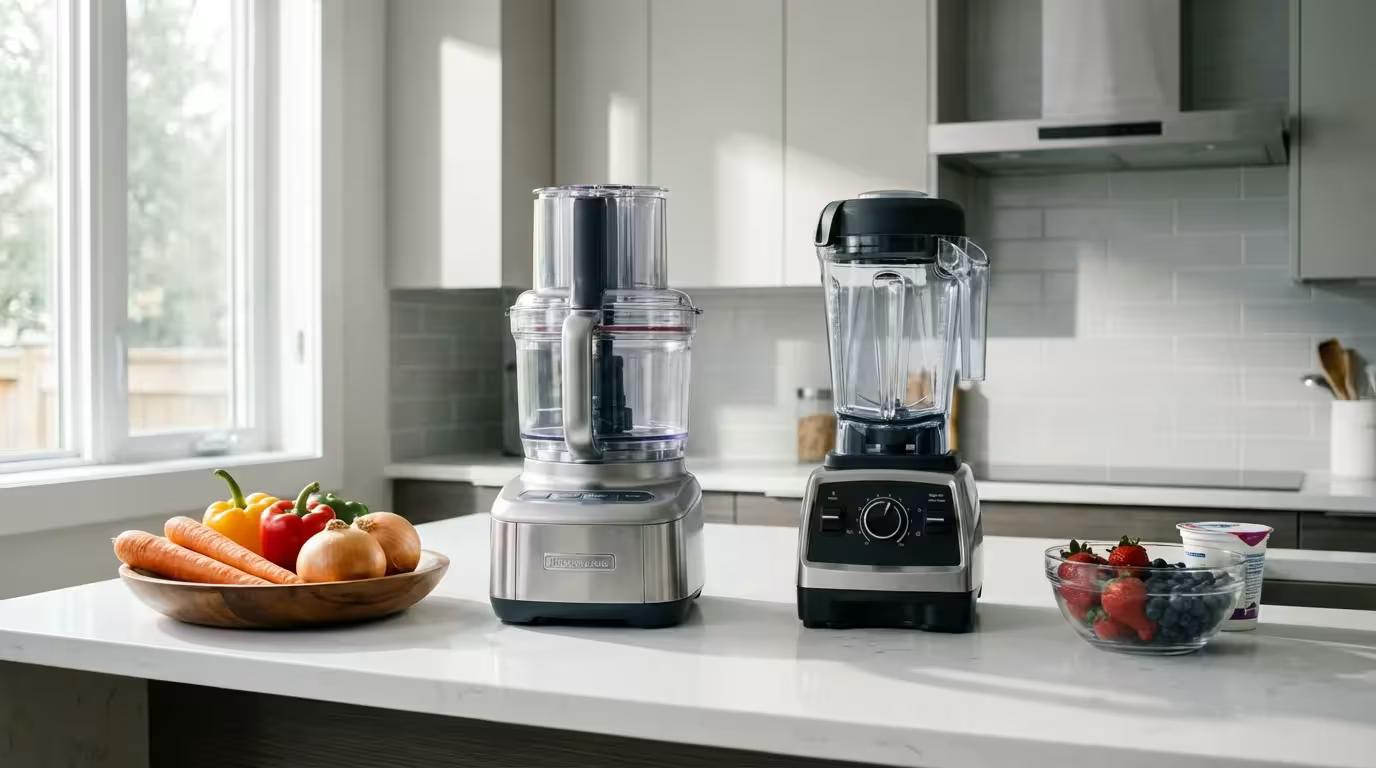
Choose a high-speed blender if smoothies, soups, and liquid emulsions are your daily routine. Choose a food processor if you spend significant time slicing, grating, dicing veggies, and making dough.
Both High-Speed Blenders and Food Processors are great options, but they work differently and offer distinct advantages.
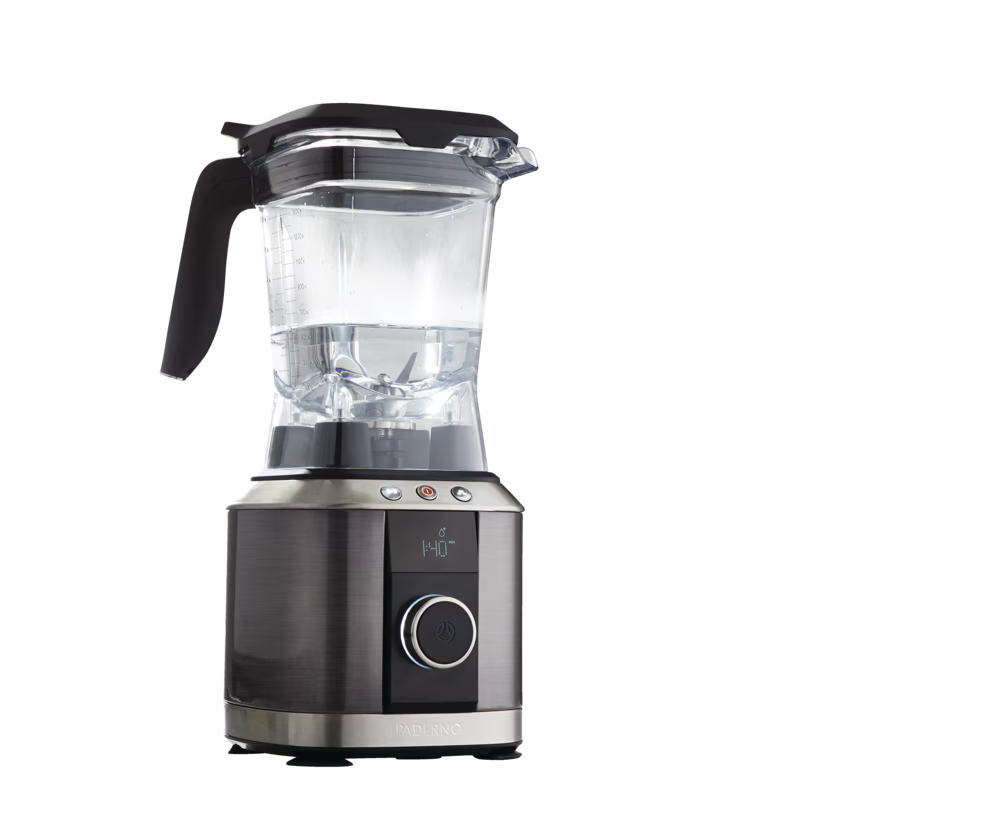
20,000+ RPM blunt blades and tapered jars create hydraulic shear that liquifies cell walls.
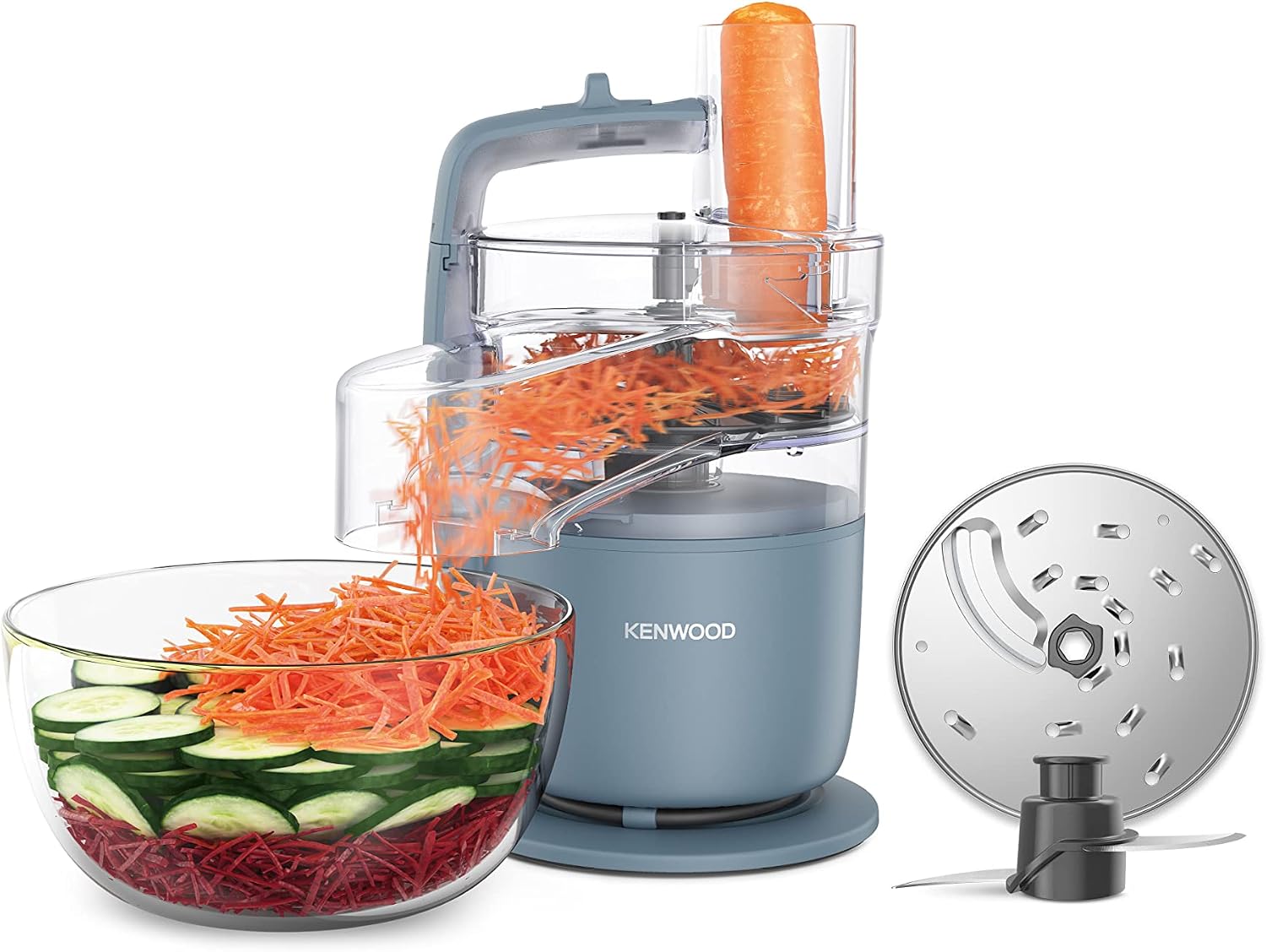
1,500 RPM sharp carbon-steel blades and interchangeable discs for precise food cutting.
While both appliances feature motorized bases and spinning metal blades, a High-Speed Blender and a Food Processor perform completely opposite culinary tasks. A high-speed blender (like Vitamix or Blendtec) uses a high-RPM motor spinning dull, laser-cut aircraft-grade stainless steel blades at speeds between 20,000 and 28,000 RPM (over 240 mph at the blade tips). In a tapered container, this generates a powerful downward vortex that pulls solids into the blade path, pulverizing cell walls through hydraulic shear forces.
A food processor, by contrast, relies on a high-torque, low-speed induction motor spinning razor-sharp S-shaped blades or specialized spinning discs at approximately 1,500 to 2,000 RPM. In a wide, flat-bottomed bowl, the sharp blades slice, chop, grate, and dice solid ingredients cleanly without turning them into liquid puree. This allows you to shred blocks of cheese, slice cucumbers uniformly, knead stiff bread dough, and chop onions with zero bruising.
If your goal is velvet-smooth green smoothies (liquifying fibrous kale and blackberry seeds), hot friction-steamed soups, nut milks, and silky emulsions, a high-speed blender is mandatory. If your goal is chopping salsa with distinct chunks, making pastry dough, grating potatoes for hash browns, or slicing vegetables, a food processor is the irreplaceable prep workhorse.
High-speed blenders break down kale, chia seeds, and ice into a drinkable, restaurant-quality silk.
Food processors shred pounds of carrots, cheese, and cabbage in under 30 seconds.
Blenders emulsify oils and friction-cook raw vegetables into steaming soups with no stovetop pan.
Food processors cut cold butter into flour for ultra-flaky pie crusts and knead bread dough.
These two kitchen powerhouses solve opposite culinary challenges. If you want silky drinkable liquids, frozen treats, and hot soups, invest in a high-speed blender. If you want to eliminate tedious knife prep, shred cheese, and knead dough, a food processor is the ultimate kitchen companion.
Yes. High-speed blenders with a manual tamper (like Vitamix) excel at making ultra-creamy peanut butter and smooth hummus because the high-speed blades release natural oils rapidly.
Explore related technical deep-dives and actionable buying guides.