Transform your mobile workflow with a private, triple-screen virtual workstation anywhere. We evaluated the best AR spatial glasses across micro-OLED text clarity, 6DoF spatial head tracking, diopter adjustment, and nose bridge comfort.
At Chooosely, our spatial computing laboratory evaluates AR glasses across four critical optical and ergonomic benchmarks using optical collimators and head motion simulators:
We measure pixels-per-degree (PPD) and modulation transfer function (MTF) to verify razor-sharp text clarity in small IDE code fonts across outer display edges.
We quantify millisecond motion-to-photon latency and screen drift during rapid head rotations and physical translational movements.
We audit frame weight distribution across nose pads and temple arms over 4-hour continuous coding sessions, ensuring total weight remains under 85 grams.
We test ambient light rejection curves, measuring contrast ratios across varied ambient lighting environments from dim airplanes to sunlit cafés.
These are the most frequent buying mistakes we see in real-world testing.
Purchasing AR glasses without verifying whether your laptop, tablet, or phone USB-C port supports video output (DP Alt Mode), resulting in blank screens on charge-only USB-C ports.
Assuming AR glasses provide 360-degree opaque virtual reality worlds, when they are deliberately engineered for translucent floating multi-screen augmented productivity.
Assuming built-in diopter dials correct cylindrical astigmatism; while diopters adjust spherical nearsightedness, astigmatism requires custom clip-on prescription lenses.
Use this simple framework to narrow down your options.
Needing multi-monitor pinned virtual displays to write code, review documentation, and debug terminals without carrying heavy external monitors.
Seeking a private, 120Hz high-refresh virtual screen to play Steam Deck, ROG Ally, and console games comfortably while traveling.
Prioritizing one-touch electrochromic dimming, confidential multi-screen privacy, and lightweight 75-80g frames for focused in-flight productivity.
Top ar spatial glasses that fit different needs and budgets.
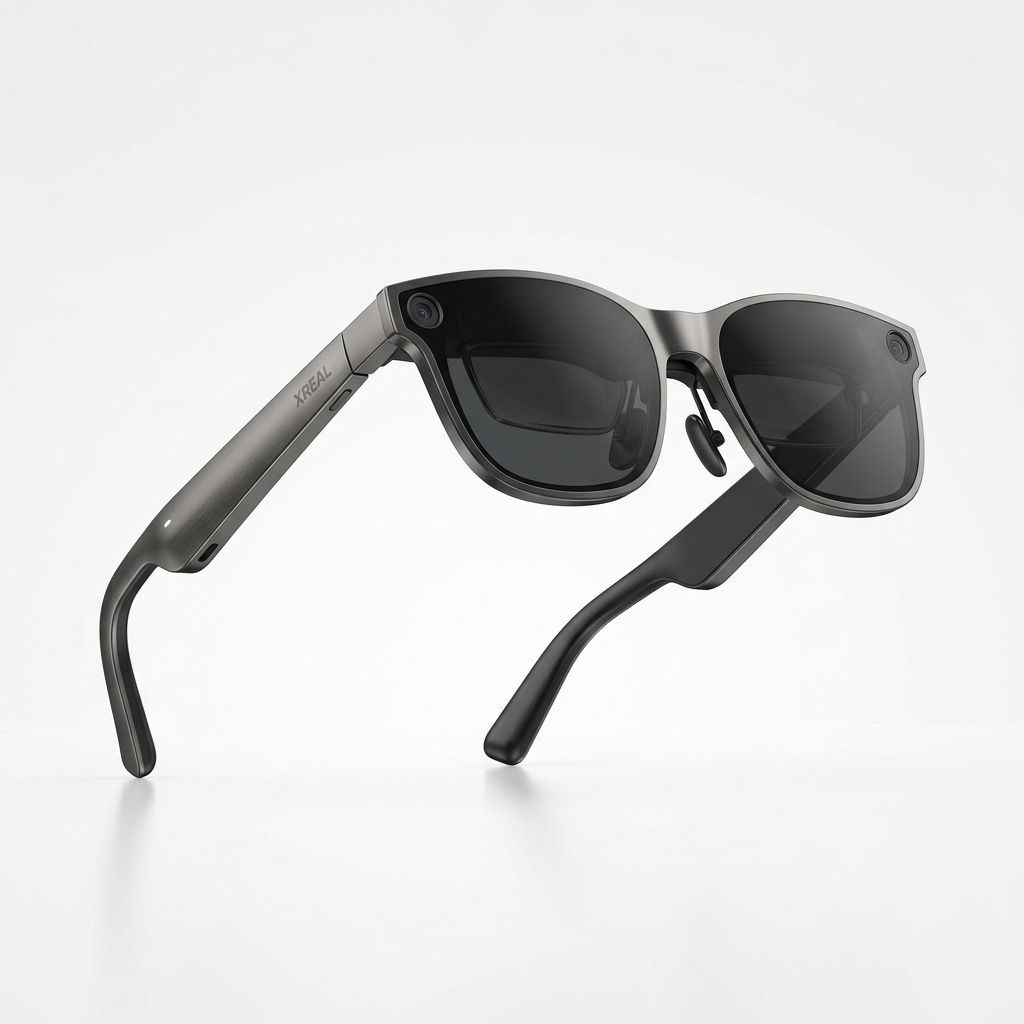
The XREAL Air 2 Ultra represents the absolute cutting edge of wearable spatial computing, bridging the gap between lightweight sunglasses and full-featured mixed reality headsets. Engineered with dual front-facing 3D environment sensors, it delivers true 6DoF positional tracking that anchors multiple virtual monitors immovably in physical space, allowing you to physically lean into screens or walk around your desk without display drift. Its dual Sony micro-OLED displays deliver razor-sharp 1080p resolution per eye at 120Hz with a generous 52-degree field of view and 500 nits of perceived brightness. Encased in an ultra-durable titanium alloy frame weighing just 80 grams, it features hand-tracking gesture recognition and full multi-window support on macOS and Windows via the Nebula spatial operating system. Choose this if you are a developer, power user, or digital nomad demanding the most advanced multi-screen spatial workstation available.
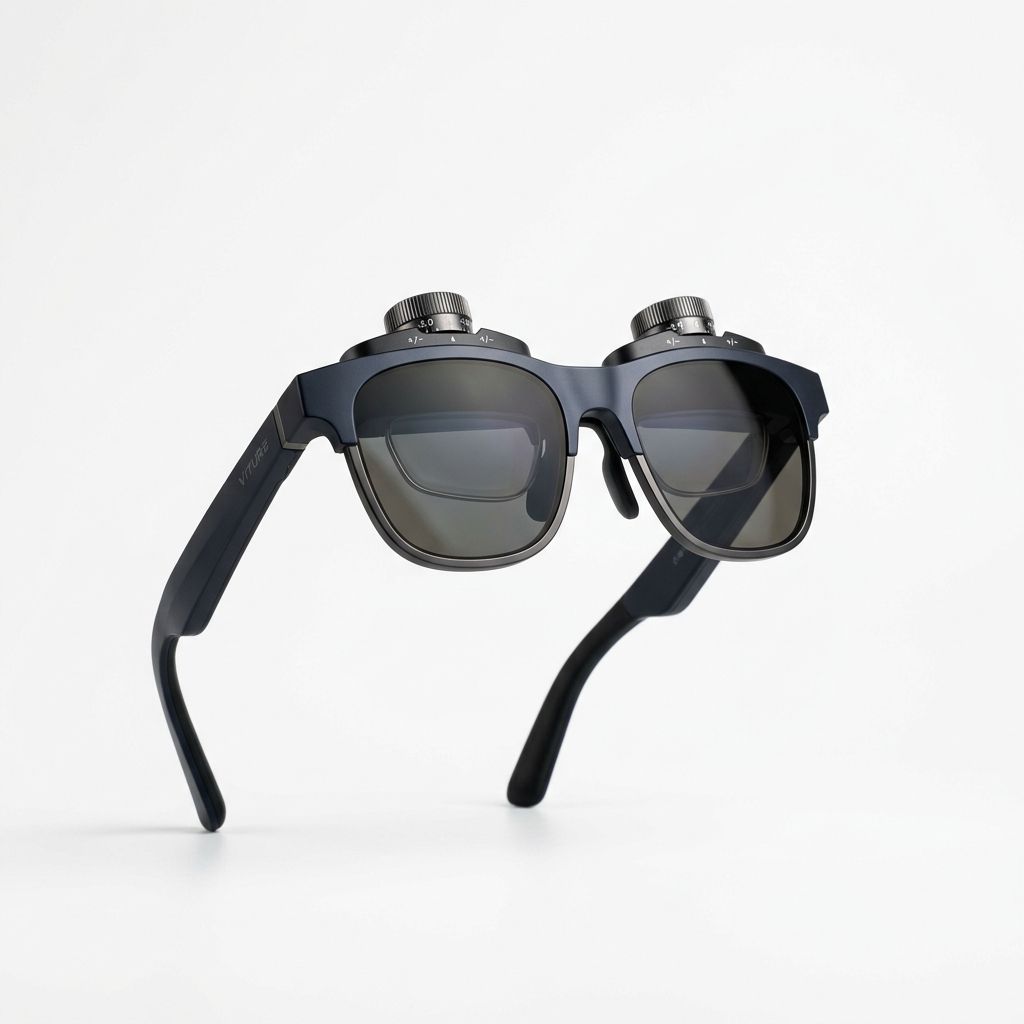
The Viture Pro XR is the premier spatial display headset for media enthusiasts, mobile gamers, and traveling executives who demand flawless optics and instant comfort. Featuring custom Sony micro-OLED panels capable of an astonishing 4,000 nits of raw panel luminance (yielding up to 1,000 nits perceived brightness to the eye), it delivers breathtaking contrast and vibrant HDR colors even under direct office fluorescent lighting. Its signature feature is an integrated electrochromic film outer lens that dims from transparent to 99.5% opaque at the touch of a button, instantly turning your translucent AR workspace into an immersive private theater. Built-in stepless rotary diopter adjustment dials (0 to -5.0D) allow nearsighted users to achieve crystal-clear text clarity without wearing glasses or purchasing custom prescription inserts. Paired with Harman-tuned directional acoustic temple speakers and the SpaceWalker multi-screen productivity app, it is the ultimate luxury travel companion.
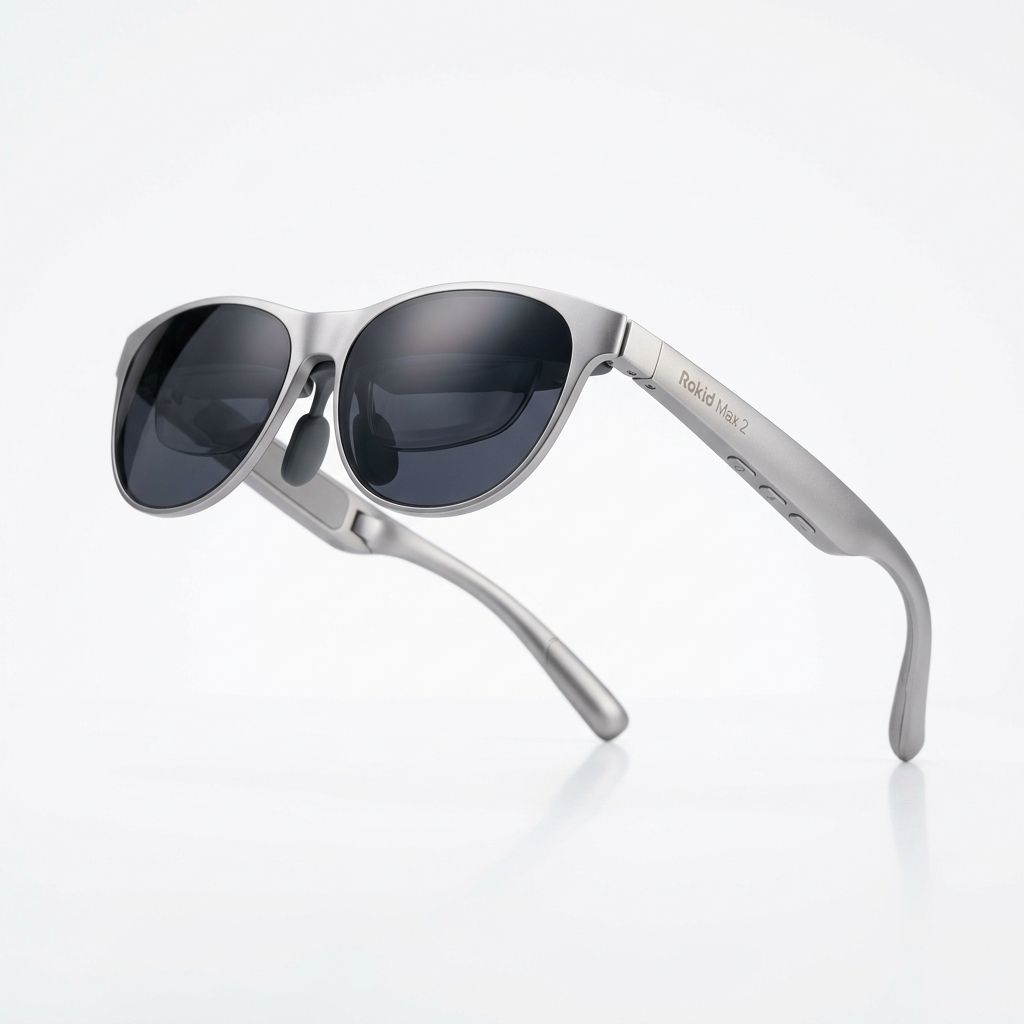
The Rokid Max 2 delivers massive visual immersion and featherweight comfort, projecting an expansive virtual 215-inch display at a wide 50-degree field of view from a chassis weighing just 75 grams. Its precision micro-OLED panels operate at a buttery-smooth 120Hz refresh rate with 600 nits of perceived brightness and border-to-border edge sharpness that prevents chromatic aberration during heavy spreadsheet analysis. Independent dual-eye diopter dials accommodate nearsightedness from 0 to -6.0D, providing instant focus calibration for multiple users. With plug-and-play USB-C DP Alt Mode connectivity across MacBooks, Windows PCs, iPad Pros, and handheld gaming consoles like the Steam Deck, it requires zero driver installation for instant mirrored or extended display operation. Choose this if you want maximum virtual screen real estate, ultra-lightweight nose bridge comfort, and exceptional value.
Motion sickness is dramatically lower in AR glasses than enclosed VR headsets because AR glasses are semi-translucent, allowing your peripheral vision to remain anchored to the physical room. Modern 120Hz micro-OLED panels and low-latency IMU head tracking eliminate cursor stutter and display lag during rapid head turns.
Explore related technical deep-dives and actionable buying guides.
