At Chooosely, our monitor laboratory evaluates gaming displays across four critical performance pillars using colorimeters and high-speed motion tracking:
We record gray-to-gray pixel transition times using 1000fps high-speed cameras to verify claimed 1ms response times and detect trailing ghost artifacts.
We test hardware latency using dedicated optical sensors to measure total millisecond delay between input signals and pixel illumination.
We audit factory color calibration profiles, Delta-E variance across the color spectrum, and sustained full-screen brightness in SDR and HDR modes.
We verify FreeSync and G-Sync compatibility across dynamic refresh windows (48Hz–180Hz+) to ensure zero tearing or micro-stuttering under frame drops.
These are the most frequent buying mistakes we see in real-world testing.
Connecting a high-refresh monitor with an older HDMI 1.4 cable that lacks the necessary bandwidth, inadvertently locking the display at 60Hz.
Plugging in a 180Hz monitor but leaving Windows Advanced Display Settings at default 60Hz, completely wasting the monitor's motion capability.
Cranking pixel overdrive settings to maximum in pursuit of low numbers, causing severe inverse ghosting and distracting overshoot halos.
Use this simple framework to narrow down your options.
Prioritizes minimum input latency, ultra-fast 180Hz–360Hz refresh rates, and blur-free motion clarity for tactical shooters.
Demands rich 4K or 1440p resolution, wide color gamuts (95%+ DCI-P3), and high HDR peak brightness for cinematic visuals.
Requires true color accuracy (Delta-E < 2), versatile flat IPS geometry for CAD and spreadsheets, and dual-mode high refresh capability.
Top high-refresh gaming monitors that fit different needs and budgets.
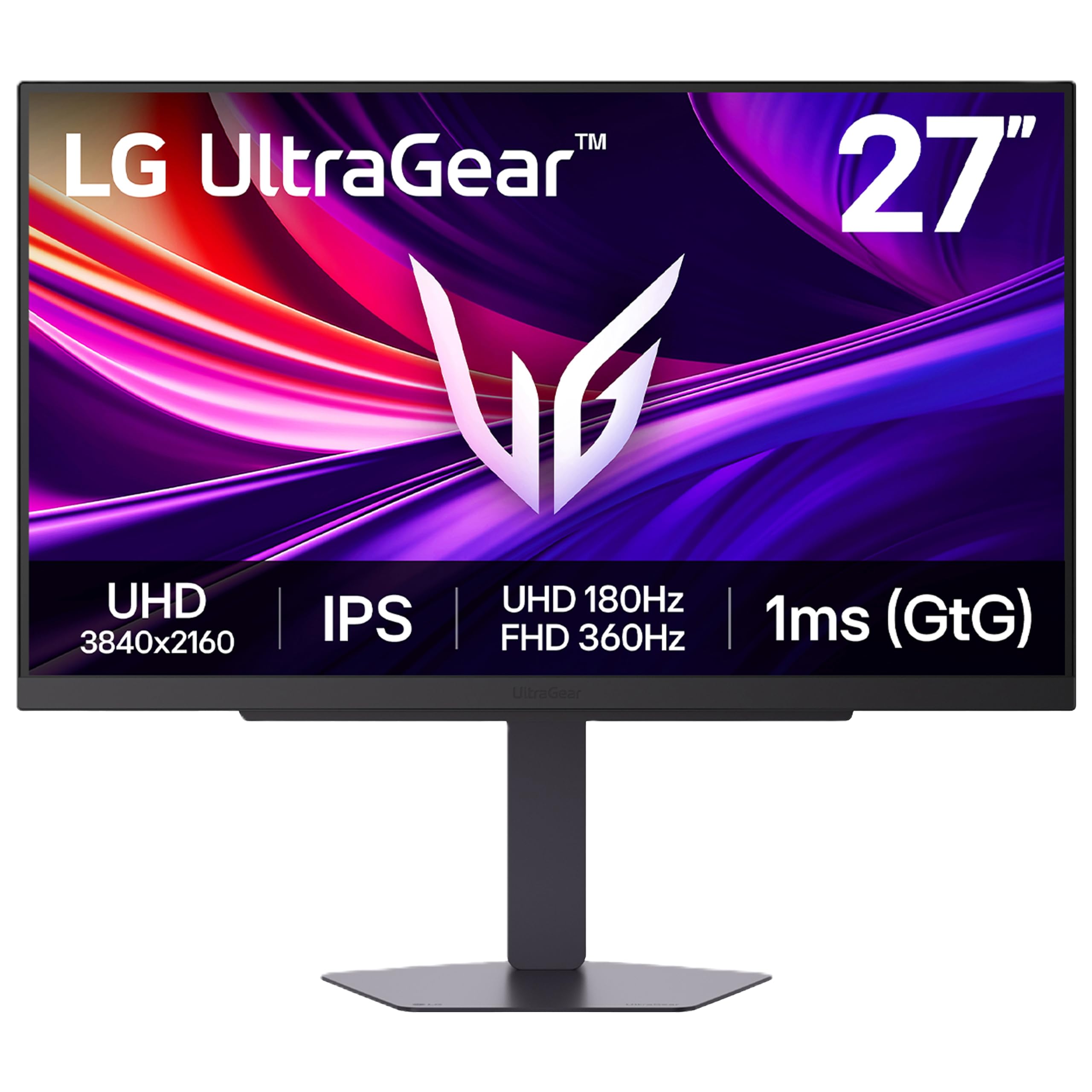
The LG UltraGear 27G810A-B represents the pinnacle of hybrid display engineering, solving the classic dilemma between ultra-sharp 4K productivity and high-frame-rate esports gaming. Featuring a 27-inch Fast IPS panel, it operates at a razor-sharp 4K UHD resolution (3840x2160) at 180Hz for detailed single-player worlds and photo editing, or switches instantly via Dual-Mode to Full HD (1920x1080) at an blistering 360Hz with 1ms GtG response times for competitive esports tournaments. With 95% DCI-P3 color gamut coverage, DisplayHDR 400 certification, and full HDMI 2.1 and DisplayPort 1.4 support, it delivers seamless compatibility across high-end PC rigs and PlayStation 5 consoles. Choose this as your ultimate do-everything centerpiece monitor.
The LG UltraGear 27GS60QC-B is the undisputed price-to-performance champion for gamers seeking deep immersion without breaking the bank. Built around a 27-inch QHD (2560x1440) VA panel with an aggressive 1000R curvature, it wraps around your peripheral vision to reduce eye refocusing during long gaming sessions. A rapid 180Hz refresh rate combined with 1ms MBR motion blur reduction delivers silky-smooth gameplay in high-velocity racing and shooter titles, while AMD FreeSync ensures tear-free frame pacing under fluctuating loads. The 3000:1 static contrast ratio delivers substantially deeper shadow details and richer dark scenes than comparably priced flat IPS monitors. Choose this for an exceptionally immersive, budget-friendly 1440p gaming setup.
HDMI 2.1 provides up to 48 Gbps of uncompressed bandwidth, allowing 4K resolution at 120Hz/144Hz without compression—crucial for PlayStation 5, Xbox Series X, and modern GPUs. DisplayPort 1.4 maxes out at 32.4 Gbps and relies on visually lossless Display Stream Compression (DSC) to drive 4K at 180Hz+ or 1440p at 240Hz+. Both deliver identical visual fidelity for PC gamers, but HDMI 2.1 is mandatory if connecting modern consoles.
Compare your top choices side by side and see which high-refresh gaming monitor fits you best.
Explore related technical deep-dives and actionable buying guides.
