Unlock effortless lawn maintenance with our expert guide to the best robotic lawn mowers. Discover top-rated models designed for various yard sizes and complexities, ensuring a perfectly manicured lawn without the manual labor.
Our rigorous evaluation process for robotic lawn mowers focuses on real-world performance under various lawn conditions, ease of setup, and long-term reliability. We assess each unit across critical metrics to provide an objective recommendation.
We analyze the evenness of the cut, mulching efficiency, and ability to handle varying grass densities and heights. This includes assessing blade quality and the consistency of the cutting height across the entire mowing area.
Evaluates how effectively the mower navigates the lawn, its ability to cover the entire area without missing spots, obstacle avoidance, and its performance on slopes. For GPS models, we test accuracy and resistance to signal interference.
Assesses the complexity of setting up the boundary wire (if applicable), pairing with companion apps, programming schedules, and overall intuitiveness of the user interface. Ease of troubleshooting common issues is also considered.
Measures actual run-time per charge and the time required for a full recharge. We calculate the effective mowing area covered per charge cycle to determine efficiency for different lawn sizes.
Examines the effectiveness of lift/tilt sensors, collision detection, and blade stop mechanisms. We also test anti-theft measures such as PIN locks, alarms, and GPS tracking capabilities.
These are the most frequent buying mistakes we see in real-world testing.
Many buyers solely focus on lawn size, neglecting factors like steep slopes, narrow passages, complex garden beds, or extreme terrain variations. An under-specified mower will struggle or fail.
Incorrectly laying or poorly securing the perimeter wire (too close to edges, loose sections, improper connections) is a leading cause of operational failures, missed spots, or the mower getting stuck or escaping the boundary.
Leaving garden hoses, toys, loose branches, or very tall grass in the mowing area can cause the mower to get stuck, damage its blades, or prevent efficient operation. The 'set it and forget it' mentality has limits.
Use this simple framework to narrow down your options.
For those with demanding schedules who want a completely hands-off lawn care solution. Prioritizes reliability, advanced navigation, large area coverage, and smart home integration for seamless automation. Prefers minimal intervention and remote control. (Consider premium models like Husqvarna Automower or advanced Worx Landroids with extended features).
Seeks the latest in robotic lawn mowing technology, including wire-free (GPS/RTK) navigation, multi-zone mapping, advanced obstacle avoidance, and robust app control with detailed analytics. Values precision, efficiency, and integration with smart ecosystems. (Focus on models with RTK or vision-based navigation, and extensive smart features).
Needs reliable automated mowing for a smaller to medium-sized, relatively flat lawn without breaking the bank. Values essential features like perimeter wire guidance, basic scheduling, and reliable cutting performance over advanced smart tech. (Look for models like Gardena Sileno City or entry-level Worx Landroids).
Top robotic lawn mowers that fit different needs and budgets.
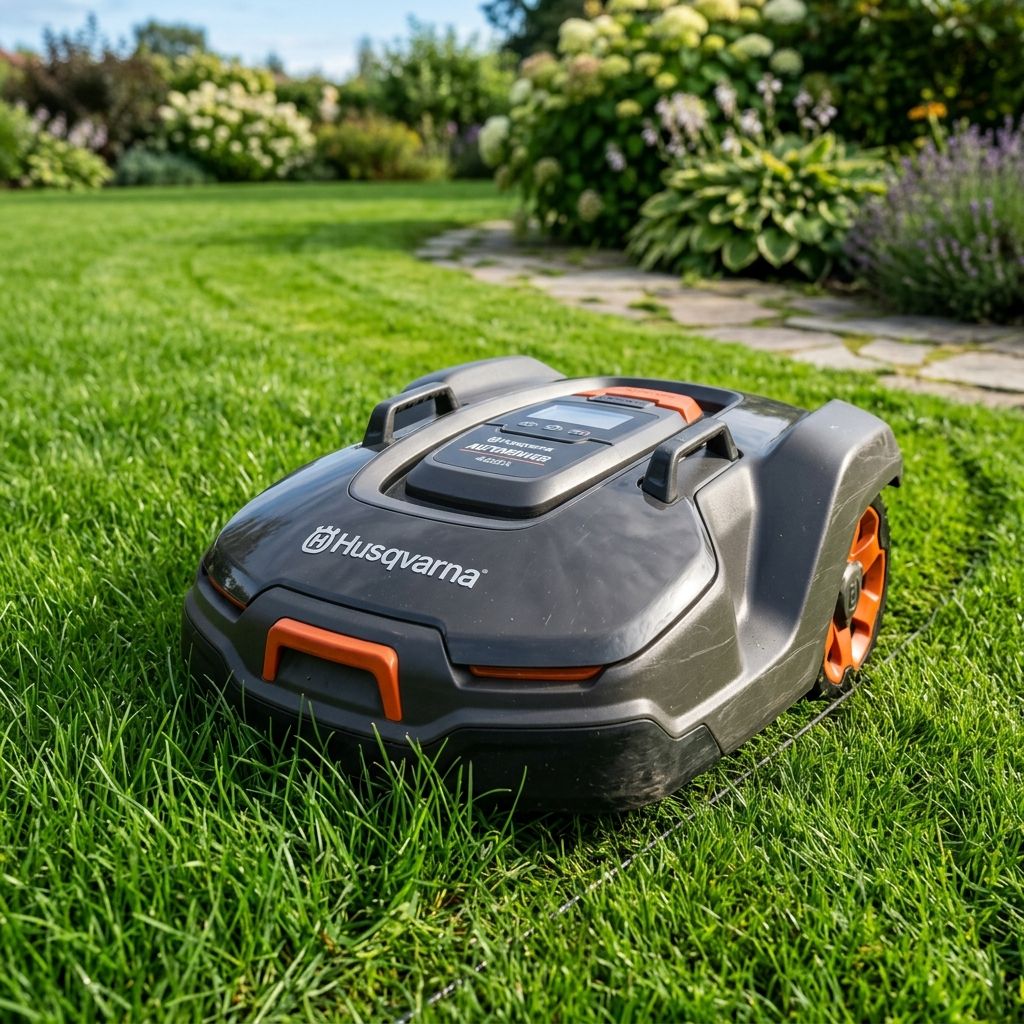
The Husqvarna Automower 430X excels with its advanced GPS-assisted navigation, handling large and complex lawns up to 3/4 acre with remarkable precision and quiet operation, making it the top choice for discerning homeowners.
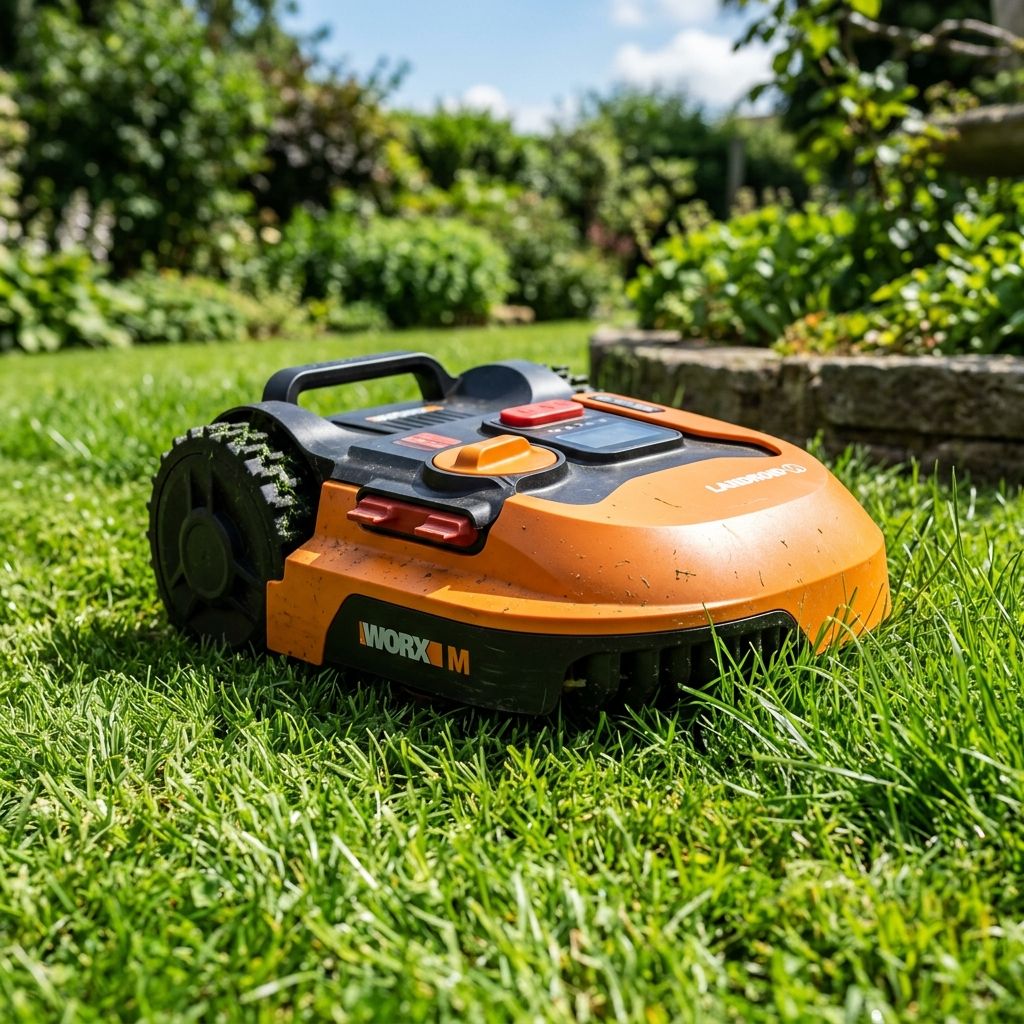
The WORX Landroid M WR140 offers an impressive balance of features, performance, and affordability for lawns up to 1/4 acre. Its modular design allows for customization with optional accessories, providing great value for smart yard care.
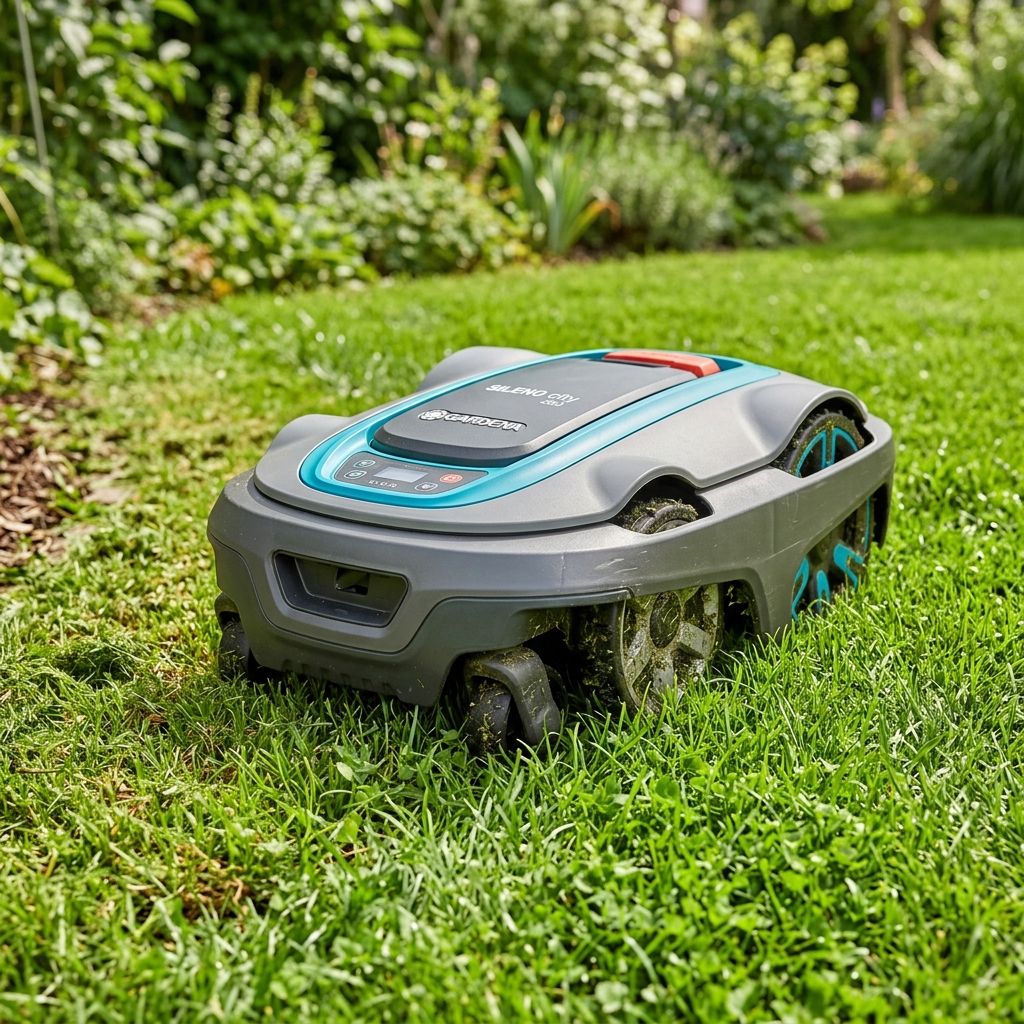
Optimized for compact and urban gardens up to 250 sq m, the Gardena Sileno City 250 provides reliable, quiet, and precise mowing. Its narrow design and SensorCut System ensure a neat finish in confined spaces, making it ideal for smaller yards on a budget.
Most robotic lawn mowers use a perimeter wire installed around the lawn's edge to define the mowing boundary. Newer, advanced models increasingly feature wire-free navigation through GPS, RTK (Real-Time Kinematic), or vision-based systems, offering more flexible setup and dynamic area management without physical wire installation.
Explore related technical deep-dives and actionable buying guides.
