Wondering whether to upgrade to a Wi-Fi 7 or Wi-Fi 6E router? We break down Multi-Link Operation (MLO), 320 MHz ultra-wide channels, 4K-QAM density, multi-gig fiber backhaul speeds, and client device compatibility.
Choose Wi-Fi 7 if you have multi-gigabit fiber (2Gbps+), wireless VR headsets, or want a future-proof 5-year network. Stick with Wi-Fi 6E for reliable, budget-friendly gigabit coverage.
Both Wi-Fi 7 (802.11be) and Wi-Fi 6E (802.11ax) are great options, but they work differently and offer distinct advantages.
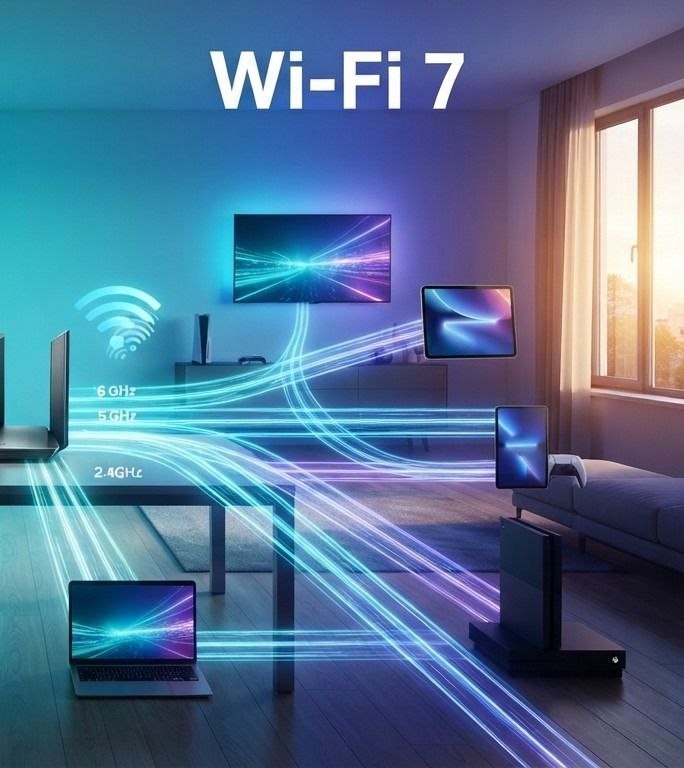
Next-generation protocol combining bands via MLO with 320MHz wide channels and 4K-QAM.
The foundational tri-band protocol that opened the clean, non-congested 6 GHz frequency band.
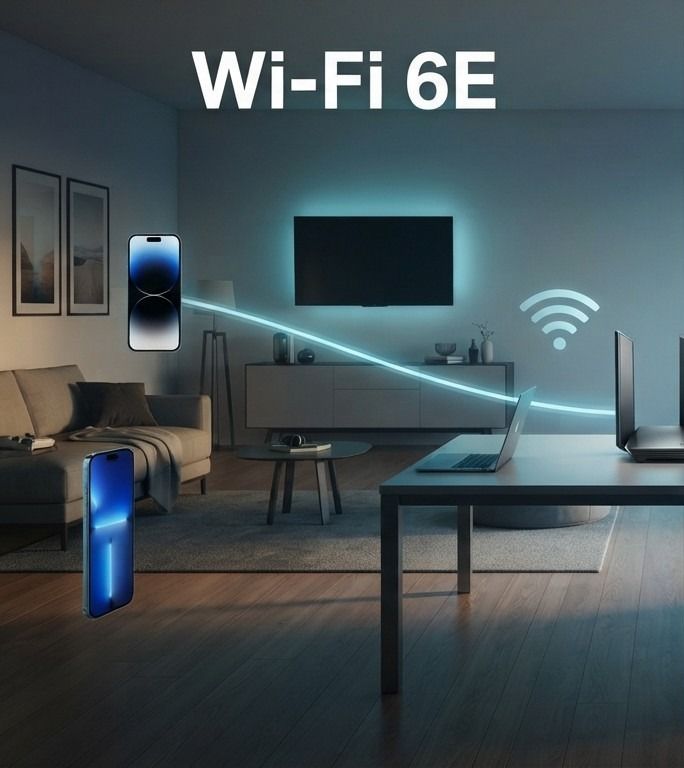
The progression from Wi-Fi 6E (802.11ax) to Wi-Fi 7 (802.11be) marks the most radical structural upgrade to wireless networking in over a decade. While Wi-Fi 6E's primary achievement was opening the pristine, uncrowded 6 GHz radio spectrum (eliminating legacy interference from microwave ovens and neighboring 2.4/5 GHz routers), Wi-Fi 7 re-engineers how data packets move across physical frequencies through Multi-Link Operation (MLO).
Under Wi-Fi 6E and all prior Wi-Fi generations, client devices can only communicate over a single frequency band at any given millisecond. If your smartphone connects to the 5 GHz band, all your data flows exclusively across that band; if microwave interference or wall attenuation causes a packet drop, your connection stalls until the radio negotiates a band switch. Wi-Fi 7's MLO completely eliminates this constraint by allowing a router and client to transmit and receive data packets across both 5 GHz and 6 GHz channels simultaneously. In *Band Aggregation* mode, MLO combines bandwidth for blisteringly fast transfers; in *Congestion Avoidance* mode, it dynamically routes packets around localized radio interference, slashing latency jitter from 50ms down to under 5ms.
Wi-Fi 7 doubles maximum channel width from Wi-Fi 6E's 160 MHz up to an expansive 320 MHz in the 6 GHz band. This acts like expanding a two-lane highway into a four-lane superhighway, allowing compatible client devices to achieve real-world wireless throughput exceeding 4 to 5 Gbps. Furthermore, Wi-Fi 7 upgrades the digital signal modulation from 1024-QAM to 4096-QAM (4K-QAM), packing 20% more data bits into every radio transmission symbol for faster burst speeds at close-to-medium ranges.
When deciding whether to upgrade in 2026, examine your residential broadband package and hardware fleet. If you subscribe to multi-gigabit fiber internet (2Gbps, 5Gbps, or 10Gbps), stream 8K VR spatial video to standalone headsets, or run a high-traffic home lab with multiple remote workers, a Wi-Fi 7 tri-band mesh system provides an invaluable wireless backhaul that rivals physical Cat6 Ethernet cabling. However, if your ISP plan is 1Gbps or below and your household primarily streams standard 4K Netflix and browses the web, a discounted Wi-Fi 6E router delivers pristine 6 GHz wireless stability at less than half the cost.
Wi-Fi 7 mesh systems wirelessly deliver 2Gbps to 5Gbps speeds to laptops without requiring physical Ethernet wall drops.
MLO links route data packets across 5GHz and 6GHz simultaneously to eliminate jitter and motion sickness in Meta Quest 3 and PC VR streaming.
Wi-Fi 6E provides ample interference-free 6 GHz bandwidth for dozens of smart cameras, laptops, and 4K TVs on gigabit lines.
Wi-Fi 6E routers deliver reliable, high-speed tri-band coverage at a fraction of the flagship Wi-Fi 7 hardware price tag.
If you have a 2Gbps+ multi-gigabit fiber connection, use wireless VR headsets, or want an uncompromised wireless mesh backhaul that will stay state-of-the-art for the next 5 years, Wi-Fi 7 with Multi-Link Operation (MLO) is well worth the investment. If you have a standard 1Gbps internet package and want clean 6 GHz airwaves without spending a fortune, a Wi-Fi 6E router remains an exceptional value.
Yes. Wi-Fi 7 routers are 100% backward compatible with all older Wi-Fi devices. However, legacy devices will communicate using their native protocols and cannot take advantage of Wi-Fi 7 features like Multi-Link Operation (MLO), 320 MHz channels, or 4K-QAM modulation.
Explore related technical deep-dives and actionable buying guides.
